
GlobalInsider article10 min read
Cyberspace is the New Frontline
From the FBI director's inbox to Jordan's wheat reserves, Iran's proxy hackers show how states now wage war cheaply, deniably, and with fear as the real payload.
Key insights1 of 4 shown
- State-backed proxy hacker groups have made cyberspace an essential, low-cost domain of modern warfare that dodges traditional consequences of armed conflict.
- Locked: for Insiders
- Locked: for Insiders
- Locked: for Insiders
While official government servers have several layers of security that help keep hackers out, the same isn’t usually true for personal accounts and devices. Iranian hackers proved that in March of 2026, when the Handala Hack Team got access to emails from one of the most senior national security officials in the United States. They released a trove of the victim’s personal documents, including pictures of him smoking cigars and letting loose in Cuba, as well as usernames that were later connected to his account on Xvideos, a popular site for adult content. That man was Kash Patel, the sitting director of the FBI.
The release came only eight days after the FBI took down four Handala-associated websites, leaving a seizure notice that said the domains were used “to conduct, facilitate or support malicious cyber activities on behalf of, or in coordination with, a malicious state actor.” Handala takes its name from a comic about a young refugee boy who became a symbol of the Palestinian resistance. It claims to be a pro-Palestinian hacktivist group, but many suspect that the group’s origin isn’t so organic. The Department of Justice accused the Iranian Ministry of Intelligence and Security of running Handala as a cover for state-backed cybercrime; the Iranian government did not respond.
Patel is in better company than he might like to admit. More recently, Handala claimed that it gained access to the phone of Herzi Halevi, the former chief of general staff for the Israel Defense Forces. On its website, the group said it accessed more than 19,000 photos and videos after having maintained access to Halevi’s devices over many years without his knowledge. Not only did they get access to personal photos and files, the group released images of diplomatic meetings that were never made public. They also claimed to have information about top-secret Israeli facilities, crisis rooms and meetings that would be released gradually as they saw fit.
This was just the latest in a series of over a dozen breaches targeting people within the Israeli government and intelligence structures. Handala has rifled through the digital lives of senior Mossad veterans, a former Israeli prime minister, a previous chief of the IDF, an ex-justice minister and hundreds of active IDF employees. A pattern has emerged where the group will gain access to a personal phone or an old inbox, sit on the information until an opportune time, then dump the contents onto the internet alongside a taunting note. The group has made it clear to some of their targets that they’re being monitored, and that their residences, locations and daily routines are known.
“Every moment, every decision, every conversation is being watched; only the time to expose them has not yet arrived,” wrote the hackers in one of their releases.
Although Handala has not yet released any information that’s been especially damaging to Israeli security structures, that doesn’t mean its victims aren't scared. In addition to embarrassing public officials, the group has made serious threats against activists, lawyers and other “enemies of Islam in the West.” The group offered $250,000 bounties for the beheading of these targets, claiming it had shared their information with the Jalisco New Generation Cartel, one of the most violent criminal organizations in the Western hemisphere. These threats of violence help turn Handala’s otherwise unimpactful digital breaches into a tool to sow lasting fear and paranoia among enemies of the Iranian state.
No Bombs Necessary
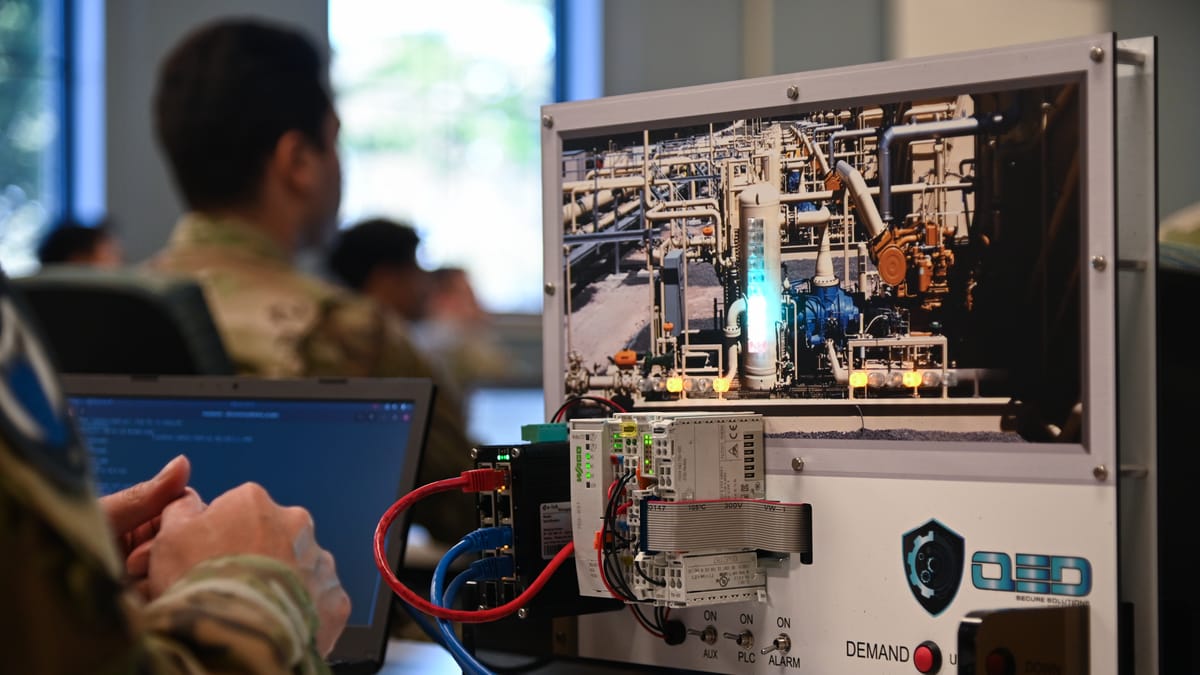
Beyond the humiliation of high-ranking officials, Iran-affiliated hackers have also made successful attacks against both American and Israeli critical infrastructure targets. Disruption of these essential services, including energy and water treatment, is certainly harder than breaching personal email accounts, but the reward is proportionally higher. By attacking the industrial structures that keep daily life running, hackers can do lasting damage to civilian populations.
Take, for example, ZionSiphon, a malware sample designed to target and disrupt Israeli water treatment and desalination plants. According to researchers at Darktrace, the code, had it been properly configured, would have changed the levels of chlorine released into the Israeli water system. The script also gave some encoded clues into the attacker’s intent, which when decrypted, read "In support of our brothers in Iran, Palestine, and Yemen against Zionist aggression,” followed by “Poisoning the population of Tel Aviv and Haifa.”
Loading…
We couldn’t load the rest of this article just now.
Insider article
This article is for Fronts Insiders.
Two-thirds of this analysis is still to come, plus 3 more key insights.
Free, no card
Read this free with a Fronts account
Then one Insider article a month. No card, no password.
- Enter your email
- Read on
- Confirm your email later
The robot check is taking too long.
or email support@fronts.co
The form could not start. Reload the page and try again, or email support@fronts.co.
Make a free accountAlready have one? Sign in below.
Fronts Insider
$5 a month · or $50 a year
- Our deep dives and 133 exclusive videos
- All 947 WarFronts, HomeFronts and DefenseFronts videos, sponsor-free
- Every Insider article, including this one
- Cancel anytime. Money back within 30 days.

Already an Insider? Sign in and you'll land back here.
Insider article
This article is for Fronts Insiders.
Two-thirds of this analysis is still to come, plus 3 more key insights.
Your free article
Read this one free
You get one Insider article a month. Use it here?
Fronts Insider
$5 a month · or $50 a year
- Our deep dives and 133 exclusive videos
- All 947 WarFronts, HomeFronts and DefenseFronts videos, sponsor-free
- Every Insider article, including this one
- Cancel anytime. Money back within 30 days.
Free to read now
No account needed
The US Withdrawal from Iraq is Islamic State's Best Chance for a Comeback
Paweł Wójcik · 12 min read
We Spoke to One of Britain's Top Generals about Drones. This is What He Had to Say.
Fronts Staff · 12 min read
Tanks are Not Dead. They Do Need to Change
Jakub Janovsky · 11 min read