
We Spoke to One of Britain's Top Generals about Drones. This is What He Had to Say.
Fronts Staff • September 21, 2026
Up next
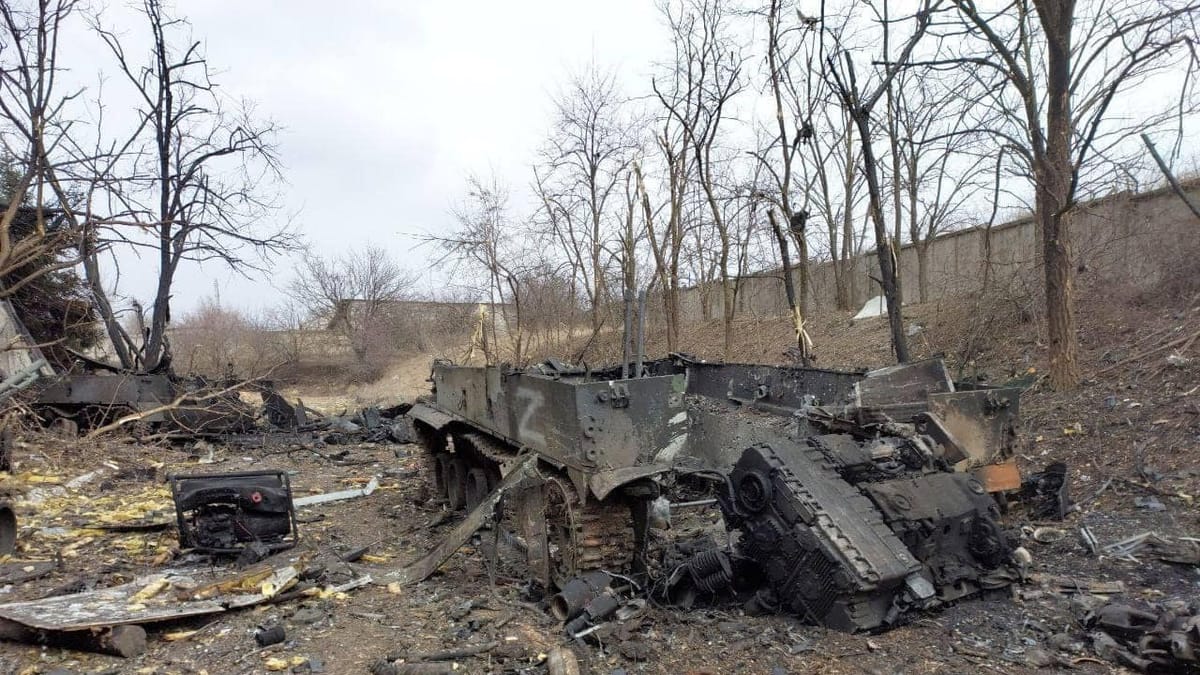
Tanks are Not Dead. They Do Need to Change
Jakub Janovsky · September 14, 2026 · 11 min read

Governments are Scrambling for a Starlink Alternative. Does One Even Exist?
Jakub Janovsky · August 17, 2026 · 13 min read

Gen-Z Revolutions are Sweeping the World. How Should the West Deal With Them?
From Nepal to Serbia, youth-led uprisings keep toppling governments without securing lasting change — and the West's Arab Spring record shows how easily outside help can make things worse.
Henrik Hannes Herkel · July 30, 2026 · 13 min read
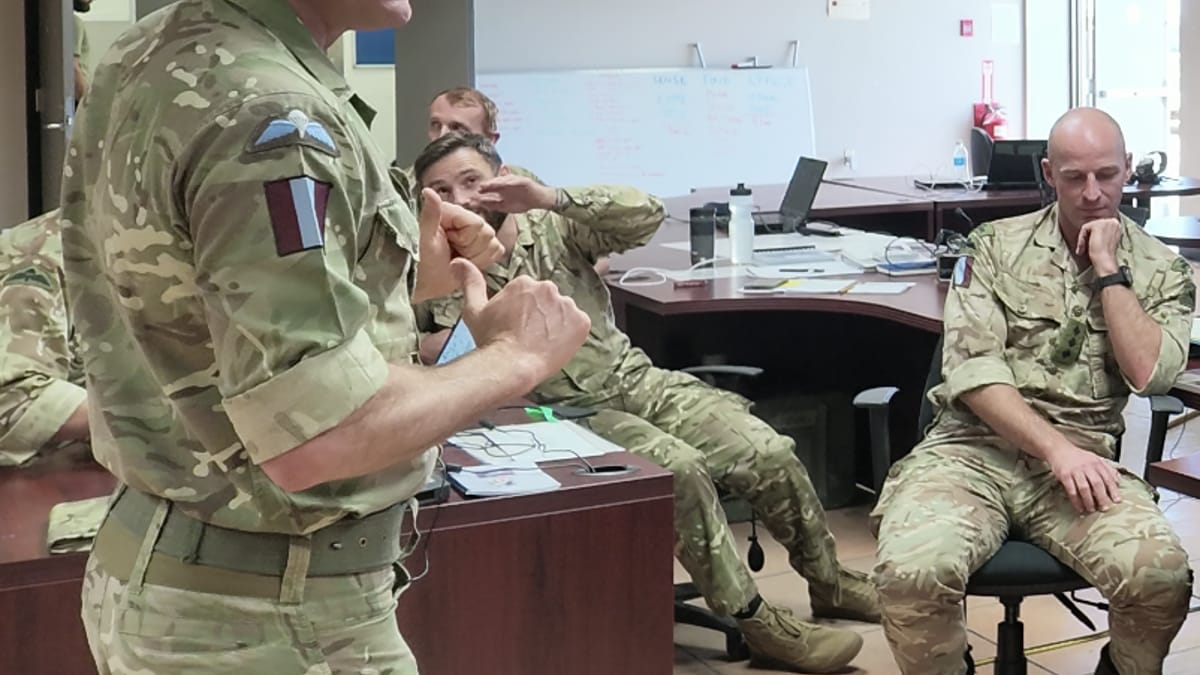
On Wednesday, 16 Sept 2026, Brigadier General Ed Cartwright of the British Army sat for an interview with our Head Writer at Fronts, Evan Moloney.
Brigadier Cartwright has commanded 16th Air Assault Brigade Combat Team since 2025, and has commanded units in Iraq, Afghanistan, and Northern Ireland. In 2014, Brig. Cartwright was awarded the OBE for his support to the counter-ISIS coalition in Iraq and Syria. In 2025, he was awarded the CBE for his role as the Chief of the Defence Staff’s Liaison Officer in Eastern Europe. Brig. Cartwright has held various positions across the Office of the Chief of the General Staff and the UK Ministry of Defence, and holds an advanced degree in International Relations and Security Studies from King’s College London.
Below are selected excerpts from Brig. Cartwright’s interview, discussing XYZ. The full interview is available exclusively as a Fronts podcast, here; find the full transcript here.
EM: I'm here with Brigadier General Ed Cartwright of the British Armed Forces; Brigadier General, if you could please introduce yourself and kind of tell the audience a bit about who you are and what you do.
Brig. Cartwright: Of course, Evan. So first of all, good evening from the UK. So my name's Brigadier Ed Cartwright and I command 16 Air Assault Brigade Combat Team. So I'm Brigade Commander, which is, in the British Army, a unit of between six and seven thousand soldiers, and we are the UK sort of high readiness land brigade, and we constitute the basis of our global response force.
EM: Many of your units’ recent adaptations and changes are drawn directly from observations of the war in Ukraine. That’s a drone-saturated battlefield, in a way that really hadn't been seen anywhere on Earth prior to that time, and has now been replicated across other battlefields. So can you speak to the specific sorts of technology, drone technology or otherwise, that it's important that your soldiers are able to adapt?
Brig. Cartwright: I think there are two big buckets driving change, or two big buckets of change being driven by two things. The first is artificial intelligence and the way that that software is changing how we fight. And the second is the advent of uncrewed systems. And clearly the two are connected, but they are sort of two distinct things.
And I think there are sort of, you can draw from Ukraine 3 broad areas of change. The first is this idea of persistent sensing or persistent observation around the battlefield. Obviously, it's more than just observation. It includes broader senses. But the persistence of those sensors is what's changing.
I was recently talking to a very well-placed source who reckons there's about a million different sensors on the battlefield in Ukraine, all the time. I have no idea if that number is accurate, but if you add the satellites, the drones, the ground sensors, the radars, you can see how it might add up to an incredible number like that.
And that means that so much more of the battlefield is visible more of the time, in whichever spectrum you're analysing the battlefield, whether it's on the electromagnetic spectrum or visually through the eye of a drone, for example.
So a much more, people use the word, transparent. It's probably the wrong word because you can't see underground. You can't see into people's minds. But no doubt, there is far greater sensing across the whole battlefield. So a much more visible battlefield. That's change number one.
Change #2 is this huge increase in cheap precision, particularly in drones, and that's driving lethality up. And you know the numbers as well as I do, but I gather that Ukraine is aiming to build something between 8 and 9 million FPV drones this year. Russia probably 7, seven and a half million. Ukraine in the region of 50,000 UGVs, uncrewed ground vehicles. And we think that's probably in the ballpark of around 20,000 FPVs being flown every day by the Russians. So incredible numbers of cheap systems that can now be massed, and they've got a long range and they're pretty accurate. So that kind of increasing ever cheaper precision is big change #2.
And big change #3 is the speed at which adaptation is occurring. I think the first commercially mass-produced FPV was produced in about March of 2023. And yet here we are, talking about maybe 7 to 10 million being produced by each side over the next 12 months. So that’s an incredible speed of adaptation. Just last week, I was listening to the CEO of Brave One, Ukraine's drone-producing conglomerate. And he was saying that he thinks that next year most strikes will be autonomous. And that is an incredible change even from where we are now.
EM: Where would you like to see better AI integration in the near term?.
Brig. Cartwright: The obvious example for me is, as we grow more and more sensors, what we need to do is filter that data and prioritise it. So I think that's where AI can play the most important role for me. So to give you an example of that, if we are surveilling, let's say, 100 square kilometres of battlefield, and I use that number completely arbitrarily, there will be a significant number of enemy items, people, and formations in that area.
I need AI to be able to identify all of those, process what they are, categorise them, prioritise them, and help me decide how to apportion munitions to get the right weapon target match. That's the sort of thing we have traditionally done through pencils and spreadsheets, and we want to be done by AI. But we still want humans to be the ones that are taking the decision to then cause some kind of effect, particularly a kinetic effect.
EM: From the point of view of soldiers in the field: How are troops learning to deal with a constantly monitored battlefield? And what impact does that have on their training, and their conduct in the field?
Brig. Cartwright: So I think it has a huge impact professionally, in terms of how we conduct ourselves. And it puts a massive emphasis on camouflage, concealment, deception and dispersal, what we call C2D2. So, it means that wherever you are on the battlefield, you are now vulnerable, you are at risk, and therefore your standard of your soldiering, particularly in terms of camouflage, concealment, dispersal and perception, needs to be significantly higher because it puts a premium on survivability. So we have got to be more survivable everywhere on the battlefield.
And there's a danger that our conversation is always about people in what we used to call the combat zone. The combat units who are driving tanks, assaulting positions, flying helicopters. You know, this obviously applies throughout the depth of the battle, space, because drones have such greater reach, both in terms of surveillance and strike. And it means we've got to have counter-UAS systems in depth to deal with both quadcopters and FPVs at the front, but also to deal with the fixed wing observation UAS deeper in the rear.
So there is a premium now on surviving. This now goes deep into the rear, hundreds of kilometers, as we're learning in Ukraine. So I think that's a really big shift in terms of our professional conduct. And then I think there's also a big shift sort of psychologically where people now feel at risk everywhere.
So we need to prepare and train our soldiers, not only to survive longer, literally to stop yourself getting killed, but also to be able to endure that persistent threat in depth. So that's about moral and psychological resilience. And those are two different elements of our training that we are attending to, in the Brigade High Command and in the Army.
EM: That must be an incredibly difficult thing to simulate in training, is that correct?
Brig. Cartwright: Yes and no. It's not actually that hard to simulate having drones in the sky, because we've got some drones. So you can stick drones up in the air, and then soldiers know that wherever they are on the battlefield, they're being observed and you can hear and see drones. So you can achieve that effect.
I think it is therefore much harder to then simulate this idea of, you know, your life is constantly at risk, particularly when you're clearly on exercise. And that's something about using the experience of our Ukrainian comrades and using the experience of what we're seeing, even on social media, you are getting a sense of the battlefield there in a way you never used to. And we need to inoculate our soldiers to a more lethal battlefield.
EM: And we've seen NATO member militaries kind of struggle with this shift over to more expendable, more attritional systems. Has that really been a big shift, to get people's heads around: ‘No, we're dealing with systems that are going to be used and thrown away, and we're not sure when they'll be thrown away, but we can assume that they're going to be thrown away and replaced constantly.’
Brig. Cartwright: Yeah, it's a really big shift. We think in the future, about 20% of that will come from what we call our survivable systems, things like tanks, artillery pieces, helicopters. These are generally crewed systems, generally armoured, generally lethal. And those are survivable systems that we want to use and reuse and we want to protect them.
And about 40% will come from our attritable systems, i.e. these largely uncrewed systems, which might be an observation drone or could be a dropper drone, but you want to use it and you want it to come back and you want to reuse it. But it's not crude. And if it gets shot down, it's replaceable at speed. My point earlier about affordability, scale and speed.
And then the remaining 40% of that combat power comes from what we call consumable systems, which are effectively fire and forget. So like an FPV or a long range mid-strike zone drone. So something which you are going to expend and not get it back.
So we think that is quite a big shift, because if you think only five years ago, I would argue that about, I don't know, 90-something percent of our fighting power or combat power rather, came from those survivable systems, you know, our armoured platforms, our helicopters. We still need those systems. They're all part of this mix of combined arms maneuver, the integrated force. But there is now a shifting emphasis in what is doing the killing. And it's now, we call it 20-40-40.
EM: For NATO militaries and for Ukraine as well, we've seen such a prioritization, and for all the right reasons, of the lives and the safety of front-line troops.
We've seen a very different approach in Russia, where you have, I believe the latest estimates from the UK just last week were 500,000 Russian soldiers killed over the course of this conflict so far, along with another million captured, missing, or wounded.
So how do you try and cope with that, that difference and make up the gap that a nation like Russia could achieve by throwing these young men into the meat grinder in a way that the UK would never even consider doing?
Brig. Cartwright: I think it was the Second World War US Marine General, I can't remember who it was, who sort of, who used to say that we're going to fight with steel, not flesh. This idea of not using our humans as an expendable resource.
Now, how the Russians choose to fight, clearly up to them. And if you're in a war with Russia and they are using humans as an expendable resource, well, then they will be expended because we have a pretty lethal military. What we've got to do is protect our people because people are not a finite resource. Even in Russia with 142 million people, you know, they are still not a finite resource.
And I would argue from my Western perspective, that that's no way to fight a war because you'll lose the support of your people, you lose a moral component, and you might ultimately expend all of your fighting people. So I would like to argue our way of war is both more moral, but also more effective because we want to use the machines to do the killing and protect the people. And I think that's the way of war that we're designing now.
Clearly, we're learning from Ukraine and they have done an incredible job with a population of something like 30 million now. And as I said earlier, probably less than a million in the combat zone. They've done an incredible job of expending Russian life and protecting Ukrainian life. And they've done that through the employment of uncrewed systems and through the creation of this idea of a death zone or a grey zone and the drone wall they've built.
I think there are elements of the Ukrainian way of war that we would want to adopt and learn from. And there are some elements we might do differently. But the idea of preserving your people and using machines to do the killing, that is the way of war that we need to get better at.
EM: This is such a huge shift to make, in your role as a commanding officer. I have to imagine there must be a lot of divergence between the lessons that you were taught as you were coming up, and the lessons that you're adapting to now, as we see warfare evolve. So, across everything we've discussed today, what do you wish you had either known sooner, or been able to implement sooner, or technology you had had sooner?
Brig. Cartwright: You might expect me to say, oh, I need more drones. Actually, what I need is a really robust and resilient digital network, because the way we want to fight is all about shifting data really fast around the battlefield, so you can identify a target,
prioritise it, and then affect it as fast as possible.
That requires a really robust network. And by network, I mean, obviously, the sort of physical hardware, the radios, the server stacks, all that sort of stuff. But also, you know, the data layer, the transport layer, the application layer, all these other elements of a network that mean you can move information and make decisions and then create effects really, really fast. So if I could ask for one thing, I would ask for a, I say, resilient, robust, incredibly kind of data rich, huge capacity network that we can fight from. That's what I really need. And we're in the process of developing that, but it's not easy.
Listen to the full Fronts interview with Brig. Cartwright, here.
Written by
Fronts Staff delivers reporting and analysis across defense, security, and global affairs.
Related articles
Tanks are Not Dead. They Do Need to Change
Jakub Janovsky · September 14, 2026 · 11 min read
Governments are Scrambling for a Starlink Alternative. Does One Even Exist?
Jakub Janovsky · August 17, 2026 · 13 min read
Gen-Z Revolutions are Sweeping the World. How Should the West Deal With Them?
From Nepal to Serbia, youth-led uprisings keep toppling governments without securing lasting change — and the West's Arab Spring record shows how easily outside help can make things worse.
Henrik Hannes Herkel · July 30, 2026 · 13 min read
Become a Member
Members get full access to premium reporting, in-depth briefings, and subscriber-only analysis.
Insiders Receive
- Full access to all premium articles and briefings
- Exclusive subscriber-only analysis and dispatches
- Support independent conflict journalism
Signed in or already a member, but still locked? Fix an access problem
From $5/month — cancel anytime