
If War Came Today: How Ships Track Submarines.
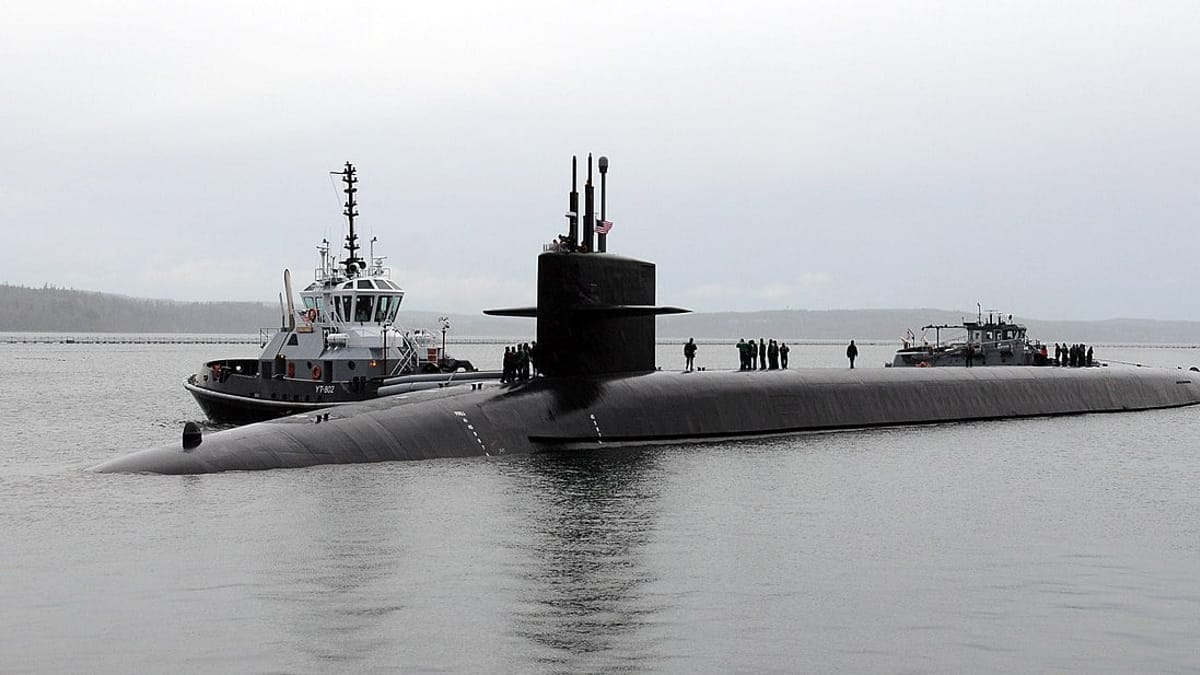
When nuclear war comes, the final missiles will be fired from submarines. Understanding how navies track these hidden leviathans is one of the most critical and secretive aspects of modern warfare.
M. Reed Whitney • October 23, 2025
Up next
Tanks are Not Dead. They Do Need to Change
Jakub Janovsky · September 14, 2026 · 11 min read

Governments are Scrambling for a Starlink Alternative. Does One Even Exist?
Jakub Janovsky · August 17, 2026 · 13 min read

Gen-Z Revolutions are Sweeping the World. How Should the West Deal With Them?
From Nepal to Serbia, youth-led uprisings keep toppling governments without securing lasting change — and the West's Arab Spring record shows how easily outside help can make things worse.
Henrik Hannes Herkel · July 30, 2026 · 13 min read
When the final missile barrage is fired, heralding in a profound silence before the snows of nuclear winter settle over the barren earth, those missiles will have been fired from a nuclear submarine.
Hiding in all four corners of all seven seas, nuclear-propelled guided and ballistic missile submarines (SSGNs/SSBNs) comprise the most furtive, the most reliable, the most frightening, and arguably, the most critical leg of the nuclear triad. Their sole mission is nuclear deterrence. They lay in wait, undetected, ensuring that any action taken by an adversary nation could be answered with a swift and terrible response.
The threat of nuclear war has hung over humanity’s head for every hour of every day, since the construction of the first Soviet nuclear submarine, Leninsky Komsomol, was completed in 1958. If war came today, there would be only one way to ensure the enemy's nuclear deterrence submarines could not plunge the world into permanent darkness. At the drop of a hat, every adversary SSBN and SSGN presently underway would need to be rapidly found and eliminated.
That endeavour would fall to the numerous Anti-Submarine Warfare (ASW) platforms stationed around the world. Unmanned systems, fixed-wing patrol aircraft, ASW helicopters, surface vessels and other submarines would all have to work in concert. Their mission is to search for, locate, identify, track, and, if the call ever comes, destroy adversary submarines.
While all of these ASW platforms are working toward the same goal, they will likely be carrying out separate missions for specific targets, independent of each other. With that in mind, we’ll explore what one of these scenarios could look like, and how an ASW-equipped surface vessel might respond to the call to arms against adversary submarines.
Scenario:
Two nuclear-armed nations, Red and Blue, are on the brink of war. Their political argy-bargy initially progressed into regional skirmishes between border forces, using only small arms, then conventional short-range missiles. Limited strikes of this nature are nothing unusual, for these bitter adversaries, but now the fear of escalation is growing, and neither side is willing to cede an inch. Fragile peace agreements have assuaged tensions in the past, but with all diplomatic ties severed, the window for a new deal is closing rapidly.
As of this morning, the first nuclear salvo was launched. The small “tactical” nuke from Red was destined for a legitimate military target well within Blue’s internationally recognised territory. Blue’s air missile defence batteries were fortunately able to intercept and destroy the missile during its midcourse phase of flight, resulting in no substantive damage in either nation. Its launch was meant to demonstrate Red’s commitment to war, and the ability of its nuclear arsenal, predicated on the assumption that de-escalation would follow immediately after the strike, regardless of whether or not it reached its target.
No such peace talks have begun. To avoid nuclear armageddon, but still achieve strategic goals, Blue has decided to respond with overwhelming conventional force. All Red nuclear assets have now become legitimate targets for Blue, and the call from the capital has been made: “attrit any and all SSBNs and SSGNs when detected.” A patrolling surface vessel from Blue’s highly capable navy, equipped with ASW equipment, has just been notified that they are operating in the vicinity of a Red Land Attack Cruise Missile (LACM) patrol area, and there is likely a Red SSBN nearby. For the sake of the scenario, let's call this Blue ship Hunter.
Shipborne ASW Sensors:
Like many other ASW-capable vessels, Hunter is outfitted to track submarines through both organic and inorganic means. Hunter is classed DDGH, marking it as a destroyer with guided missiles and the option to carry helicopters. Organic means are assets that are indigenous to the ship and are never detached from it, like long, trailing sensor “tails”. Inorganic assets refer to ASW capabilities that are not physically affixed to the boat; in most cases, this would mean an ASW-capable helicopter.
Almost any class or size of ship can be outfitted to conduct ASW missions; larger vessels, however, are typically able to carry longer and more capable "tails", a common and effective organic sensor. "Tails" or "Tail-Ships" are the colloquial terms used to describe Surveillance Towed Array Sensor System (SURTASS) and Multi-Function Towed Array (MFTA).
Both SURTASS and MFTA are long lines of sensor arrays towed aft (or behind) the vessel and are able to search for and track submarines from considerable distances. SURTASS is a passive-only sensor, meaning that once it is submerged, it simply listens for indications of a submarine.
MFTA can do that as well, but it can also actively "ping”. Informally named for its characteristic “pinging” sound, an acoustic asset’s active ping is a large amount of acoustic energy generated from underwater sensors to probe for undersea contacts. A MFTA's active component will ping while the passive component waits for the return of that acoustic energy. Based on the time and the strength of the return, with large contacts producing more substantial energy returns, the acoustic subsystems will determine the location and size of the subsurface contact.
There are benefits and drawbacks to both active and passive ASW sensors. Passive-only sensors may be cluttered with noise that does not interest the ASW operators, like whale sounds or merchant vessels passing above, which can distract an ASW operator from identifying their target. On the other hand, once a passive sensor, such as SURTASS, detects a contact, it may also be able to identify the exact type of submarine through specific acoustic frequencies unique to that class of submarine.
Active-only ASW can generally detect contacts at greater range, but can only determine that there is something in the water creating a sonar return. After multiple returns, an operator using active-only ASW can calculate the course and speed of the underwater object, but would be unable to ascertain friend-or-foe status. Thus, when an ASW operator is able to utilise both active and passive sensors, they are considerably more capable in their mission.
MFTA operators can simultaneously monitor both active and passive systems, so once the contact enters passive range, operators will be able to track (and possibly identify) the submarine through multiple means and methods.
Ships are often also equipped with Hull-Mounted Sonar, which provides similar capabilities as MFTA, except it is permanently affixed to the ship's hull. The advantage of Hull-Mounted Sonar is its durability, and the crew's ability to manoeuvre the vessel at any speed or bearing without fear of damaging the asset.
MFTA and SURTASS, on the other hand, are highly delicate and require slow-moving speeds to prevent damage during towing. Every minute is crucial in anti-submarine warfare, and the time it takes to deploy MFTA or SURTASS could be costly, if the ASW-ship is not configured for the right mission when it needs to be. While utilising a MFTA may be the first course of action for a ship engaged in ASW operations, inorganic assets are equally important in carrying out the task.
Typically, larger ASW-equipped vessels, such as destroyers, carry ASW helicopters, including the US-made MH-60R Seahawk and the UK's AW-101 Merlin. While only able to search over short distances, these helicopters primarily act as "pouncers", prepared to pounce on any indication of an adversary submarine that the ship or its allies have detected. Although limited in range compared to their fixed-wing counterparts, the Merlin and Seahawk are very capable of tracking and attacking submerged targets once they have gained contact.
Their primary means of tracking submarines are "dippers" and sonobuoys. "Dippers" or dipping sonar are large acoustic transmitters and receivers lowered from a hovering helicopter to multiple depths underwater. When a Merlin’s crew believe they are overhead or in the vicinity of a target, they will initiate a low-altitude hover and deploy their dipping sonar.
Like the MFTA on their motherships, an ASW helicopter’s dipper can track a submarine in both active and passive modes. When their target approaches the outer range of their dipper, the aircraft will retract the dipper and reposition itself in front of the target's course to maintain contact.
In the meantime, they can deploy either active or passive sonobuoys to aid in their mission. Having multiple sensors in the water simultaneously, to provide supplemental information, can greatly assist in identifying and locating a submarine. While this process is ongoing, helicopters will be relaying all of this real-time maritime information to their mothership and any other allied vessels in their vicinity.
The final aspect of ASW is the attack: how a ship or an ASW-equipped helicopter would neutralize their adversary once they have found and identified it. Traditionally, ASW-outfitted ships utilise depth charges or torpedoes to defeat their subsurface foes. Modern ship-launched torpedoes can operate in a similar capacity as their air-launched counterparts, or they can be employed via Anti-Submarine Rockets (ASROC). ASROCs act as a delivery vehicle for the torpedoes, which break apart from the torpedo apparatus and allow for ships to deliver ASW payloads from greater distances. For a more timely attack, ships can rely on their ASW helicopters.
ASW helicopters like the Merlin or Seahawk are outfitted to carry air-launched torpedoes. The Seahawk utilises the Mk-54, which is a reasonably capable torpedo with a range of nearly 10,000 yards, active and passive searching/homing on its target, a terminal speed of 40 knots, and a 96-pound warhead. At 40 knots (74 Kph/ 46Mph), the Mk-54 can out-sprint any submarine over short distances, distinguishing between countermeasures and an actual target.
The Merlin is equipped with the similarly capable Stingray torpedo, which has a slightly shorter range of 8,000 yards, but can travel upwards of 45 knots (83 Kph/ 52Mph) and carries a 100-pound Torpex warhead. Carrying up to four Stingrays, the Merlin is capable of four separate attack runs on a target.
Search, Track, Identify, Attack:
How might our example vessel, Hunter, then search for and track the adversary submarine? For the sake of realism, we’ve limited her capabilities to align with real-world ASW destroyers – a state-of-the-art MFTA suite, but no hull-mounted sonar – instead of giving her every possible weapon in every nation’s arsenal.
Upon notification that there may be an adversary submarine in her vicinity and that her new primary mission tasking is ASW, Hunter would slow to begin her search. Her tail would then be slowly and deliberately deployed in the water.
While the MFTA is being deployed, a separately deployed SSQ-36 bathymetric sonobuoy collects crucial environmental information, measuring the temperature at different depths. With that information, trained operators can determine how sound might propagate at various depths, and determine the ideal depth to begin their search.
Simultaneously with those measurements, Hunter’s ASW operators would construct a search plan based on existing tactics, environmental factors, and any intelligence they might have on their adversary. With the cornerstone of Blue’s national defence plan being ASW, they are well-versed in their mission, and have a strong idea of the patrol areas frequented by Red’s SSBNs. The area they are tasked to search today is far too expansive for a helicopter search alone, and thus, Hunter elects to begin an active search using her MFTA.
The silence of the morning is broken by a deafening “PING”, then silence… “PING”. Above the surface, the ping is felt only in the immediate vicinity of the vessel, but underwater, it travels for miles. Hunter has commenced her ping plan. The spacing of the pings has been deliberately measured to exploit the environment and the vulnerabilities of the Red submarine, taking into account how sound is propagating through the specific search area, and how long it would take for that acoustic energy to return to the sensor. As she continues to search actively, Hunter would weave a path around and through the search area, ensuring there is nowhere for her enemy to hide.
The destroyer’s acoustic suite receives the raw acoustic data from the MFTA and converts it into a visual display on the operators' monitors. The headsets they wear give them real-time acoustic information, providing multiple ways to detect an adversary contact.
When Hunter ultimately gains contact with an underwater object, her operators and commanders must decide where the contact is moving, whether it is close enough to hear any identifying frequencies, whether it is within attack range of our ship, whether it is friend or foe, etc. If the contact is rapidly identified as the adversary they are searching for, the destroyer may elect to engage them with ship-launched torpedoes. But if it is too far, or there is any ambiguity in the identification of the target, then Hunter’s operators will have to turn to their inorganic assets.
In this scenario, the target is too distant for Hunter to maintain tracking or identify, so she elects to launch her ASW helicopter, a Merlin.
Once mission tasking shifted to ASW, the helicopter’s aviators and maintainers would have hurriedly preflighted the aircraft, anticipating their mission to begin shortly after the initial notification. Within minutes of the launch order, Hunter’s Merlin would be airborne and making best speed toward the contact. Timing is crucial, especially if the destroyer loses the ability to track the target due to distance or manoeuvring.
When en route to their target, the Merlin’s ASW crew must continuously run through different mathematical scenarios to assess where the submarine may be by the time they get close. Then, they match the associated tactic to their decided search position. Once they are over this position, they will deploy buoys and lower their dipper, and then initiate their own ping plan.
In this case, the crew's calculations were correct, and the Merlin gained active contact almost immediately. Through providence or proficiency, they picked a perfect spot and hold both active and passive contact with their foe. Shortly thereafter, the operators determine that this contact is the Red nuclear submarine that they were looking for. The Merlin's crew recognises how unlikely it is to get a classification of their adversary so quickly. In ASW, it is better to be lucky than good.
The Merlin would, of course, relay this information to Hunter, but only to provide situational awareness. The Merlin’s crew would already be aware of their mandate, and understand the rules of engagement. The helicopter would proceed inbound for an attack.
Once Hunter’s Merlin is within range and has the required attack criteria, the Stingray would be pneumatically shot downward toward the water before its graceful entry, so that the weapon's delicate sonar arrays are not damaged.
The aircrew would be affixed to their headsets, listening to the raw audio of their sonobuoys. With so many objects producing noise in the water, it is most effective to rely on the expertise of the operators to distinguish between them by ear. They listen for many things, to discern whether the torpedo is running as planned, whether the target is manoeuvring to avoid the weapon, whether the submarine has launched countermeasures to defeat the torpedo, and whether the torpedo has sped up and acquired its target.
For this aircrew, the attack was a successful hit. They know this because the sensor operator heard explosions, followed by metal crunching in the water, but no submarine sounds. Debris later floats to the surface, and an oil slick begins to form, indicating that the target must have been destroyed. Any relief the crew feels at the accomplishment of their mission would be rapidly quashed, by the sober realisation that they have just sent nearly 150 men to the depths.
The Merlin loiters overhead for a while longer. They must continue to assess the breadth of the damage and wait to see if, against all odds, there are survivors in need of assistance. Once the final damage assessment is complete, the ASW helicopter will return to its mothership and await further mission tasking.
This Red submarine no longer poses a threat to the Blue military installations or cities, but there are dozens more undetected and beyond Hunter's and her Merlins' reach. It would be the responsibility of Blue’s submarines and MPRA (Military Patrol and Reconnaissance Aircraft) to find them and ensure they meet the same fate as the first Red submarine.
Sources
- 1deagel.com/news/Norway-Selects-Sting-Ray-Mod-1-Anti-Submarine-Torpedo_n000005722.aspx
- 2defenseindustrydaily.com/mfta-the-us-navys-new-towed-array-for-naval-detection-04956
- 3dote.osd.mil/Portals/97/pub/reports/FY2013/navy/2013surtass.pdf?ver=2019-08-22-111217-050
- 4fpri.org/article/2025/08/atlantic-bastion-the-future-of-anti-submarine-warfare
- 5navair.navy.mil/product/MH-60S-Seahawk
- 6naval-technology.com/projects/mk-54-lightweight-torpedo/?cf-view
- 7umaritime.com/bathythermal-sonobuoys
- 8navy.mil/Resources/Fact-Files/Display-FactFiles/Article/2169310/vertical-launch-anti-submarine-rocket-asroc…
Written by
M. Reed Whitney is a military analyst, freelance writer and Icelandic Coast Guard Staff Officer with over 12 years of military experience. As a retired U.S. Naval Flight Officer with a background in Anti-Submarine Warfare and a B.S. in Political Science from the United States Naval Academy, he primarily covers maritime threats, policy, history and politics in the High North. He resides in Hafnarfjordur, Iceland, and is currently pursuing an M.A. in History from the University of Highlands and Islands to broaden the scope of his writing. Reach him for comments or questions via email at m.reed.whitney.freelance@gmail.com.
Related articles
Tanks are Not Dead. They Do Need to Change
Jakub Janovsky · September 14, 2026 · 11 min read
Governments are Scrambling for a Starlink Alternative. Does One Even Exist?
Jakub Janovsky · August 17, 2026 · 13 min read
Gen-Z Revolutions are Sweeping the World. How Should the West Deal With Them?
From Nepal to Serbia, youth-led uprisings keep toppling governments without securing lasting change — and the West's Arab Spring record shows how easily outside help can make things worse.
Henrik Hannes Herkel · July 30, 2026 · 13 min read
Become a Member
Members get full access to premium reporting, in-depth briefings, and subscriber-only analysis.
Insiders Receive
- Full access to all premium articles and briefings
- Exclusive subscriber-only analysis and dispatches
- Support independent conflict journalism
Signed in or already a member, but still locked? Fix an access problem
From $5/month — cancel anytime