AfricaInsider article9 min read
Somalia's Ongoing Breakup is Destabilizing the Region
Somalia's ongoing breakup is destabilizing the region, with shifting alliances, external meddling forces, and increasingly-powerful terror groups...

Key insights1 of 4 shown
- The breakup of Somalia's federal system is accelerating, threatening to ignite wider regional instability across the Horn of Africa and beyond.
- Locked: for Insiders
- Locked: for Insiders
- Locked: for Insiders
On March 30, Somali Federal Government forces entered the capital of South West Province, forcing its president to flee and seek exile in neighbouring Kenya. A swift win for the government in Mogadishu marked, however, only the latest explosion of the Somali powder keg, with shifting alliances, external meddling forces, and increasingly-powerful terror groups setting this long-suffering nation up for another - likely larger - detonation in the near-future.
Somalia is not an easy topic to discuss. Most remember the country from such movies like “Blackhawk Down” or “Captain Phillips”, depicting true events happening in parts of the country, with the former taking place in Mogadishu and covering the famous disaster of American forces in 1993, and the latter a pirate hostage taking. Both may have given their viewers an idea of how complicated Somalian affairs were and continue to be. After all, while the main players of the last century no longer exist, their heirs have in many ways entrenched themselves, shutting down any prospects for the country’s stability.
The warlords, once bitter enemies of the region and the world, have been killed or hidden their ambitions. Some, like former Islamic Courts Union members, went on to establish the al-Qaeda aligned al-Shabaab. In 2026, that group is a force to be reckoned with, and a poster child of the late Bin Laden’s and Zawahiri’s ambitions, standing together with JNIM in West Africa as the primary bearers of the white and black banners. The other warlords continue to plot for their clans and ethnic groups' benefits or…create other jihadi groups, with the Islamic State today interfering in the Puntland region’s affairs. Although far from the headlines, this hasn’t gone unnoticed by Washington, with the Trump administration hitting the group with a campaign of airstrikes that (aside from the Iran war, of course) remains the biggest US military effort since December 2024.
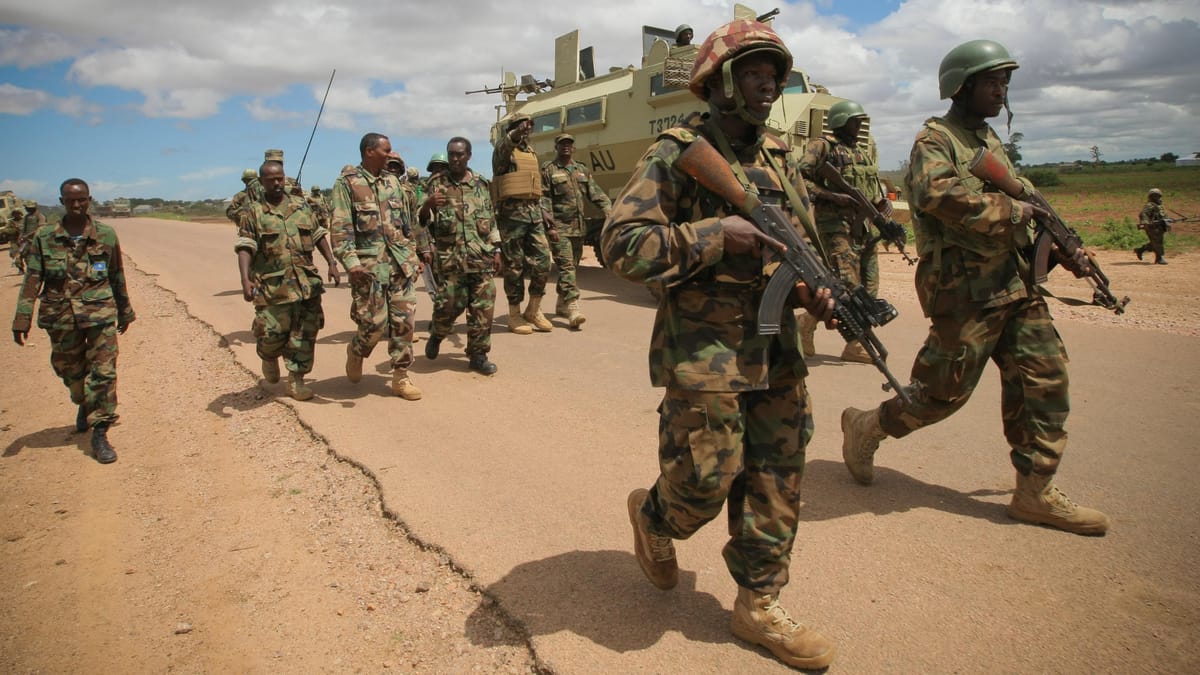
To even begin to understand the state of Somalia today, we have to know the basics of the political system. After the Ethiopian invasion in 2006 that toppled the Islamic Courts government, followed by yet another UN-led mission called AMISOM to support the legitimate and officially recognized government, the country was divided into five semi-autonomous regions, six if counting SSC-Khaatumo, newly created in 2025 (or seven, if you hold that Somaliland is a part of Somalia, which Somaliland itself emphatically does not). The other five are: Jubaland, South West, Hirshabelle, Galmudug and Puntland.
Each of these regions has its own military, president, and parliament, with the federal government in Mogadishu overseeing proceedings. Somaliland, from the get go, refused to even participate in the system, staying outside any central control and working on independence (SSC-Khaatumo, a breakaway region of Somaliland, is a bold attempt by Mogadishu to assert its sovereignty in the northern parts of Somalia). Power however, was in truth invested in the 4.5 system - a major obstacle for any major reform in Somalia, that ensured true rule remains in the hands of major clans. Four of those clans, the major power brokers, have secured a quota of permanent seats in the parliament, ensuring their influence in every political cycle. The rest (the “half” in 4.5 system), is shared by minority groups. Challenging this system means challenging the clans, and so every centralization attempt by Mogadishu tends to spiral into uprising and violence.
And this is how we got to where we are today, with yet another round of the civil war. President Hassan Sheikh Mohamed, who regained the presidency in 2022, following his first rule in 2012-2017, returned to the role desperate to concentrate power in his hands. This meant slowly dismantling guardrails, all while trying to keep in check the autonomous governments and ensure his former ally Ethiopia didn’t block his plans. In 2024, he advocated for changes to the constitution that included extending the presidential term from four years to five, appointing prime ministers without the need of parliament’s approval, and creating a new system whereby representatives would be directly elected by the people (rather than partially appointed, as in the 4.5 system). That was too much for some of his former allies, who, in the case of Puntland and Jubaland regions, withdrew from the federal agreement, citing their inability to comply with unfair, unconstitutional practices.
Loading…
We couldn’t load the rest of this article just now.
Insider article
You've read the first third. Keep going.
Two-thirds of this analysis is still to come, plus 3 more key insights.
Free, no card
Read this free with a Fronts account
Then one Insider article a month. No card, no password.
- Enter your email
- Read on
- Confirm your email later
The robot check is taking too long.
or email support@fronts.co
The form could not start. Reload the page and try again, or email support@fronts.co.
Make a free accountAlready have one? Sign in below.
Fronts Insider
$5 a month · or $50 a year
- Every Insider article
- 130 exclusive videos
- All 886 WarFronts and HomeFronts videos, sponsor-free
- Cancel anytime. Money back within 30 days.
Already a member? Sign in and you'll land back here.
Insider article
You've read the first third. Keep going.
Two-thirds of this analysis is still to come, plus 3 more key insights.
Your free article
Read this one free
You get one Insider article a month. Use it here?
Fronts Insider
$5 a month · or $50 a year
- Every Insider article
- 130 exclusive videos
- All 886 WarFronts and HomeFronts videos, sponsor-free
- Cancel anytime. Money back within 30 days.