Russia-Ukraine WarInsider article12 min read
What's Really Going On With Fedorov’s Firing? A Former Adviser Explains
Mykhailo Fedorov’s dismissal was officially presented as part of a government reshuffle. The real explanation lies in his growing popularity, his confrontation with Ukraine’s military establishment, and the powerful interests threatened by his defence reforms.
Key insights1 of 4 shown
- Fedorov's dismissal was politically motivated by his rising popularity and threat to Zelenskyy, not a routine reshuffle.
- Locked: for Insiders
- Locked: for Insiders
- Locked: for Insiders
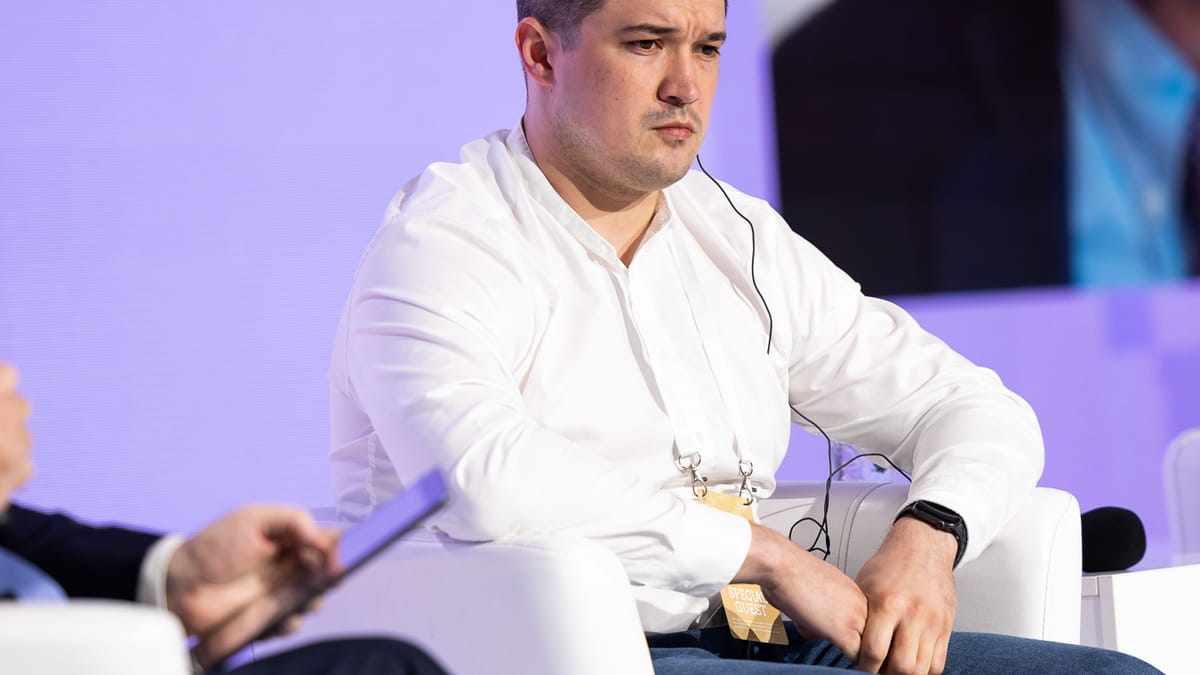
I have known former Ukrainian defence minister Mykhailo Fedorov for approximately two and a half years. During that time, I advised him on drone warfare tactics, operations and strategy. As a regular contributor to Fronts.co, I therefore feel a responsibility to explain what I believe is really behind his dismissal on 15th July 2026.
Fedorov’s removal was not an ordinary change of personnel. He was one of Ukraine’s most popular ministers, widely regarded as an effective manager and a comparatively corruption-free public servant—a rare reputation in Ukrainian politics. His dismissal triggered the largest wartime political demonstrations Ukraine has seen since Russia’s full-scale invasion. Thousands of people, many of them young Ukrainians, repeatedly gathered in Kyiv and other cities to demand his reinstatement.
The protests were not simply an expression of personal loyalty to one minister. They reflected a deeper fear that the government was reversing the military reforms Ukraine urgently needs to survive.
The political consequences were immediate. President Volodymyr Zelenskyy’s standing declined, while Fedorov’s popularity rose sharply. Recent polling placed Fedorov close to former commander-in-chief Valerii Zaluzhnyi among potential presidential candidates. A survey by SOCIS, a respectable Ukrainian pollster, found that Fedorov would defeat Zelenskyy in a hypothetical second round, receiving 43.4 per cent against the president’s 24.7 per cent. Another produced an even larger projected margin.
These are only hypothetical polls: Ukraine cannot hold normal presidential elections while martial law remains in force. Nevertheless, they reveal the political danger Fedorov had begun to represent. He was no longer merely a successful technocrat. He was becoming a credible alternative national leader.
The minister who represented a different Ukraine
What made Fedorov so unusual?
First, he represented a new generation of Western-minded Ukrainians. He was only 28 when he became minister of digital transformation in Zelenskyy’s first government in 2019. By the time of his dismissal, he was 35. While other ministers came and went through repeated government reshuffles, Fedorov survived and accumulated greater responsibility.
His best-known civilian achievement was Diia, the mobile application through which Ukrainians can access a wide range of government documents and services. Diia demonstrated Fedorov’s central political idea: government should be fast, measurable, accessible and digital. Bureaucracy should serve citizens rather than forcing citizens to serve the bureaucracy.
The same philosophy eventually shaped his approach to war.
When much of Ukraine’s senior military establishment still treated commercially produced unmanned aerial vehicles as “wedding drones” unsuitable for serious combat, Fedorov understood that drones would transform the battlefield. He helped drive the development of Ukraine’s drone programme at a time when many traditional officers remained focused on conventional artillery, armour and infantry tactics inherited from the Soviet military system.
I advised Fedorov during the creation of the Unmanned Systems Forces in 2024, an experience I describe in detail in my book, Rise of the Machines: Drone Warfare in the Russia-Ukraine War. Fedorov—“Misha”, as many insiders call him—brought my proposals to President Zelenskyy and then commander-in-chief Valerii Zaluzhnyi. He attempted to convince both men that unmanned systems needed to be placed at the centre of Ukraine’s war strategy.
Not every proposal was accepted. Some were diluted, delayed or blocked by institutional resistance. Nevertheless, when the recommendations were implemented, they contributed to Ukraine’s ability to maintain an advantage in aerial, maritime and ground-based unmanned systems. They also helped Ukraine strike Russian forces in places where Moscow did not expect serious pressure, including the Kursk region during the summer of 2024.
Fedorov’s influence over drone warfare was initially informal, but its political importance grew as unmanned systems became indispensable. By 2025, drones were no longer a specialist capability. They had become central to reconnaissance, artillery correction, tactical strike, logistics interdiction, maritime operations and deep attacks against Russia’s military-industrial and energy infrastructure.
Success in this field made Fedorov one of the most influential figures in the Ukrainian government. In practical terms, his political weight was second only to Zelenskyy’s and was arguably comparable to that of ex-presidential advisor Andriy Yermak and parliamentary leader Davyd Arakhamia, with whom I also communicated about drone warfare.
That influence probably contained the seeds of Fedorov’s downfall.
Loading…
We couldn’t load the rest of this article just now.
Insider article
You've read the first third. Keep going.
Two-thirds of this analysis is still to come, plus 3 more key insights.
Free, no card
Read this free with a Fronts account
Then one Insider article a month. No card, no password.
- Enter your email
- Read on
- Confirm your email later
The robot check is taking too long.
or email support@fronts.co
The form could not start. Reload the page and try again, or email support@fronts.co.
Make a free accountAlready have one? Sign in below.
Fronts Insider
$5 a month · or $50 a year
- Every Insider article
- 129 exclusive videos
- All 883 WarFronts and HomeFronts videos, sponsor-free
- Cancel anytime. Money back within 30 days.
Already a member? Sign in and you'll land back here.
Insider article
You've read the first third. Keep going.
Two-thirds of this analysis is still to come, plus 3 more key insights.
Your free article
Read this one free
You get one Insider article a month. Use it here?
Fronts Insider
$5 a month · or $50 a year
- Every Insider article
- 129 exclusive videos
- All 883 WarFronts and HomeFronts videos, sponsor-free
- Cancel anytime. Money back within 30 days.
Free to read now
No account needed