
WarFronts Weekly 10.13.2026.
🟨 WarFronts Weekly | Egyptian Airstrike Kills Dozens of Sudanese Gold Miners & More
Fronts Staff • October 13, 2026

“One survivor said the death toll exceeded 200, adding that hundreds were wounded, many critically.”
Egyptian Airstrike Kills Dozens of Sudanese Gold Miners:
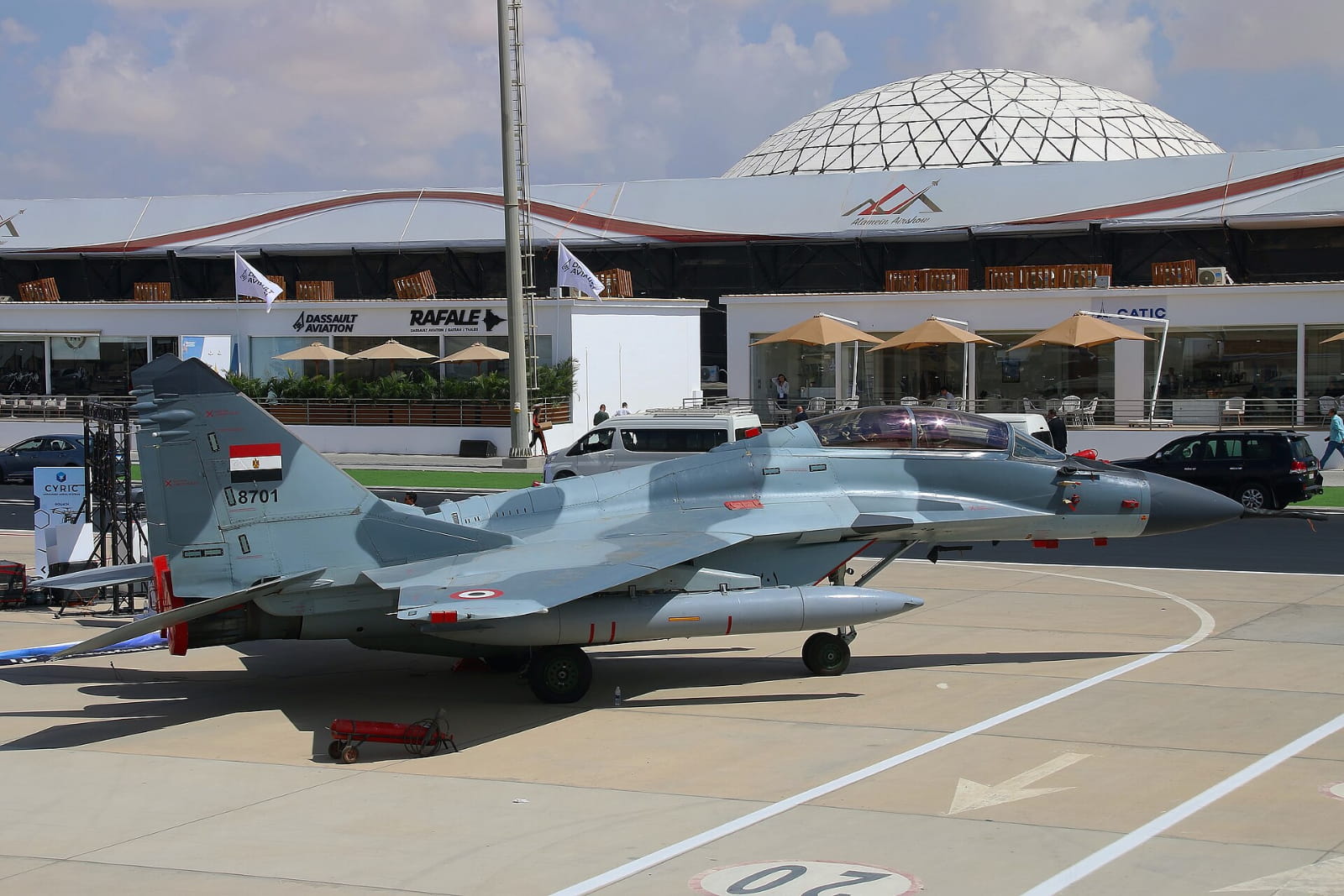
At least seventy-two Sudanese artisanal miners perished on Saturday, when Egyptian warplanes bombed an open-air mine near the Egypt-Sudan border. Beyond the immediate devastation of the strikes, the incident risks creating a wider rift between Cairo and the Sudanese Armed Forces, after the two governments agreed to work together to contain a potential conflict on the Ethiopia-Eritrea border.
The strike took place several hundred miles away from the front lines of the Sudan conflict, in an area that has been under the control of Sudan’s military regime continuously, with no known presence of Rapid Support Forces convoys moving from neighboring Libya. While the rights group Emergency Lawyers estimated that seventy-two people perished in the strike, local sources told the Sudan Tribune that at least two hundred people were killed.
The attack took place in the early hours of Saturday morning, when a coming shift change at the mine meant that morning-shift workers were already on the premises, while overnight workers were still in the mine, including in underground areas. Eyewitnesses described aircraft firing at least five missiles, destroying the miners’ camps and multiple excavation pits.
The Egyptian military has not directly referenced the airstrike in northern Sudan, and has not made any comment on the deaths of the miners, despite Emergency Lawyers’ assertion that Egypt was responsible. Egypt, however, openly admits that it has conducted anti-crime operations in the southern part of its own territory, near the Sudan border.
Illegal artisanal gold mining is common in Egypt’s remote south, where organized criminal elements oversee the extraction of gold before routing it through international laundering chains. The proceeds from those mining operations ultimately fund both sides of the Sudanese Civil War. WarFronts covered Africa’s gold-laundering mechanism in 2024, here.
The Egyptian military indicated on Monday that its campaign in southern Egypt is continuing, and that warning leaflets were recently dropped in the vicinity of known artisanal mines. Speaking to Reuters, Egyptian sources said that warplanes did intend to strike in the area, to address the “chaos” in the border region, although Reuters did not indicate whether its sources believed the strike across Sudan’s borders was intentional.
Sudan has, for now, stopped short of blaming Egypt for the strike, but junta leader Abdel Fattah al-Burhan ordered the creation of a fact-finding committee to investigate what took place. The strikes were the second incident of this scale within just four months, and Egypt was behind the prior incident, as well. The findings of a Sudanese inquiry into that prior strike have not been made public.
The incident is especially concerning given the spiking tensions in the wider region, after Eritrean troops crossed into Ethiopia last week amidst a spiraling conflict, and Ethiopian forces now probe into Eritrea, per open-source conflict monitors. Days after Sudan, Egypt, and Somalia expressed their support for Eritrea in an anti-Ethiopia coalition, this mass-casualty airstrike risks fracturing Eritrea’s regional base of support.
Image Credit: “Mig-29M Egyptian Air Force El Alamein 4.9.24” by Colin Cooke Photo is licensed under CC BY-SA 2.0.

Introducing DefenseFronts:
The team behind WarFronts, HomeFronts, and Fronts.co is proud to announce the launch of DefenseFronts on YouTube.
On DefenseFronts, our team takes a close look at the global defense industry, focusing on the tech, the tactics, and the cutting-edge innovations that shape modern battlefields. From changing alliances to future flashpoints, we know that today's global military-industrial complex is a window into tomorrow's geopolitics. With Simon at the helm, and a growing team of experts and Fronts-universe veterans working behind the scenes, we know you'll love DefenseFronts, so check it out.
This Week on Fronts:
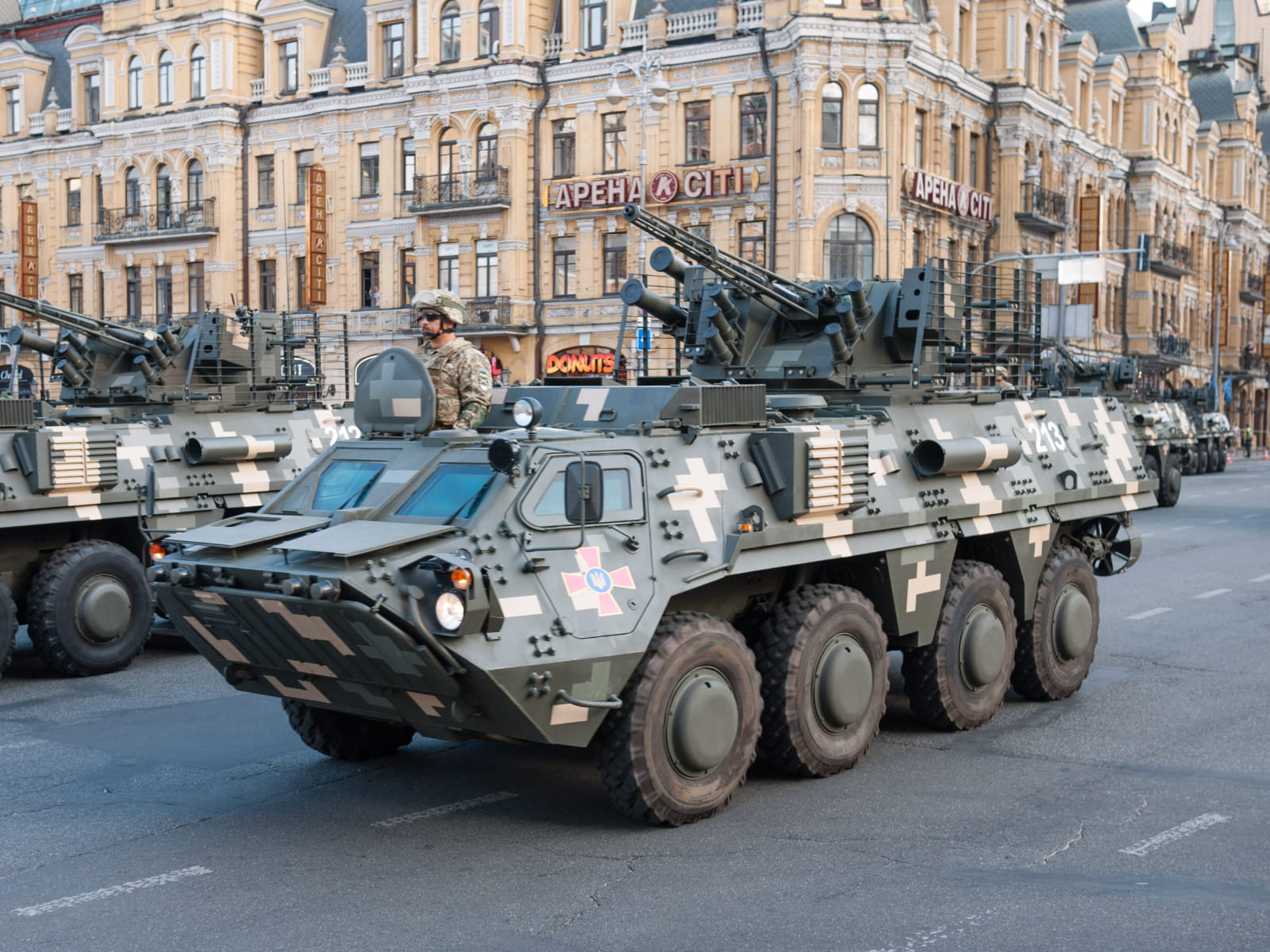
Across over four and a half years of war in Ukraine, the depletion of Russian heavy armor is a well-known challenge for Moscow. Less discussed, however, is the destruction of Ukraine’s Soviet-era heavy equipment reserves, after those armored vehicles played a vital role in the early phases of the war.
In this article for Fronts, open-source analyst Jompy explains the status of Ukraine’s heavy armor reserves, from the corruption and forced downsizing that compromised a large share of the Ukrainian fleet before the war began, to the use of Ukraine’s remaining heavy armor on the modern battlefield.
Guinea-Bissau Regime Tightens its Grip:

Nearly a year after seizing power in a coup d’etat, the military government of Guinea-Bissau is consolidating its control over the nation, delaying a set of presidential elections that were meant to restore nominally civilian rule. But with the nation’s opposition leaders still active abroad, and a rogue element within the country’s presidential guard refusing to stand down, the junta leaders’ grip on Guinea-Bissau remains fragile.
The nation’s first set of post-coup elections were initially scheduled to take place in December, with both the presidency and the nation’s legislative seats expected to be contested. Recently, however, the regime has made clear that any election would be neither free nor fair; in August, a low-turnout, boycotted referendum approved a new constitution that would consolidate power in the hands of the nation’s president.
Then, in early October, the regime formally barred the return of exiled former president Umaro Sissoco Embalo, who was overthrown in the 2025 coup. Embalo has lived in Morocco since his ouster, and was disqualified from contesting the presidency this December, as the nation’s new constitution bans candidates who have not lived in Guinea-Bissau continuously for five years before being elected.
On Thursday, 8 October, the regime’s National Electoral Commission advised junta leader General Horta N’Tam that the nation had not yet met the conditions necessary to hold an election. N’Tam’s Prime Minister explained that there was no political party that was “in an ideal position to contest the elections”, claiming that most of the nation’s political leadership is outdated.
N’Tam has reason to fear Guinea-Bissau’s political opposition, which has proved able to coordinate both domestically and abroad, despite early attempts at crackdowns. According to N’Tam, the nation also faces a threat from a rogue presidential guard unit that is known to support former president Embalo. Some guard members have been disarmed and detained over the last several weeks; N’Tam’s focus on the unit, however, may be an effort to create pretext to postpone elections and justify crackdowns.
More broadly, coup plots and abuses of power are commonplace in Guinea-Bissau, where former president Embalo was accused of orchestrating the coup that overthrew him, in order to avoid losing an election days before the results were announced. The rights organization Freedom House scores the country at just 33/100 in its Freedom in the World 2026 index, citing corruption, organized crime, and a withering assault on the political rights of its people.
Image Credit: “Palácio Presidencial em Bissau” by Joehawkins is licensed under CC BY-SA 4.0.
What We're Reading:
The rapid advance of Yemen’s Houthi rebels across the Red Sea coast last month marked a stunning failure for Saudi Arabia, as its proxy forces, loyal to Yemen’s internationally recognized government, utterly failed to prevent the Houthi assault.
In this article, the New York Times provides an in-depth look at the collapse of Saudi-backed forces, after warnings from a prominent commander, Lieutenant General Tareq Saleh, were ignored in advance of the Houthi attack. Drawing on over a dozen interviews, the article lays out a sequence of foreseeable, preventable collapse across Yemeni lines, due to a combination of incompetence, complacency, unjustified optimism, and much more.

Around the World:
Yemen’s Houthi rebels have doubled down on long-range missile strikes against Saudi Arabia, after at least thirteen people were killed, and over three hundred injured, in a strike that impacted a passenger terminal at Riyadh’s King Khalid International Airport. A later strike against the same airport left another person dead, and nearly a dozen injured. The Houthi organization claimed credit for the attacks, while the airport will be closed until at least Saturday. Saudi Arabia responded with waves of retaliatory strikes; meanwhile, on the ground in Yemen, Houthi forces tightened their control over the besieged city of Ta’iz.
A man accused of plotting to assassinate Polish Prime Minister Donald Tusk and his Minister of Defense, Wladyslaw Kosiniak-Kamysz, was arrested after the nation’s Interior Ministry reported a potential assassination attempt. While the aspiring assassin’s motives are not yet known, Poland’s leadership is of particular interest to Russia amidst Moscow’s broader hybrid-attack campaign against Europe, due to Tusk and Kosiniak-Kamysz’s roles in Poland’s rapid remilitarization. A government spokesperson noted the rising frequency of threats against Polish leaders and civilians; last week, the nation witnessed several attempted stabbings over the course of days.
A Wagner Group-linked Telegram account claimed that the group’s mercenary fighters joined soldiers of the Central African Republic (CAR) in an attack on rebel positions near the Chadian border, where over sixty rebel fighters were killed or wounded. Per that report, the rebels fled into Chad to reconsolidate their forces, and may retaliate in an attack against populated areas. While Russia’s CAR detachment of mercenary fighters has nominally joined the paramilitary Africa Corps, it is unique in retaining the character and structure of the earlier Wagner Group, despite Moscow’s attempts to intervene. WarFronts covered the Wagner situation in the CAR in a recent episode, here.
A second cargo ship was sunk off the Bulgarian coast, with eleven sailors missing at sea, one week after a similar incident led to the sinking of a Togo-flagged vessel, with ten crew members presumed dead. The latest sinking came as two cargo vessels reported drone strikes. Moscow-friendly Prime Minister Rumen Radev has not explicitly blamed Russia for the incident, although Radev did admit that the sinking “benefits the Russian Federation”.
An ambush in Nigeria’s northern Zamfara State led to the deaths of at least twenty people in a convoy of traders, who were attacked as they traveled to a market under escort from the Nigerian military. At least twelve civilians were among the dead, along with three policemen, four soldiers, and an officer of Nigeria’s civil defense corps. While the identities of the attackers are not publicly known, Zamfara State is known for its ongoing struggles with armed bandit groups, which rustle cattle and take civilians hostage for ransom.
Also in Nigeria, authorities acknowledged an airstrike in the northeastern state of Borno, where at least forty members of the Islamic State – West Africa Province (ISWAP) were killed. A senior ISWAP commander was among the dead, according to the Nigerian military. The group of jihadists included elite fighters of ISWAP’s Murabitun unit, who were targeted while allegedly planning coordinated attacks on Nigerian army troops.
Russia suffered 50,000 casualties in the month of September, according to NATO officials, as described in a recent report by Bloomberg. Per NATO figures, up to 28,000 of those casualties are Russian troops killed in action, particularly in deliberately constructed “kill zones” created by Ukrainian forces. Kyiv, by contrast, is estimated to have endured only about 5,000 casualties in the same period, underscoring the importance of unmanned systems for Ukraine’s manpower-strapped armed forces.
British Prime Minister Andy Burnham acknowledged that a recent incident near the airbase RAF Fairford was “highly likely” to have been directed by the Iranian Revolutionary Guard Corps, and planned in Iran. On September 27, five British men were arrested near RAF Fairford, where US strategic bombers had flown for months, to conduct strikes against Iran. Several other individuals have been brought in for questioning by British authorities, although detectives maintain that vans belonging to the five detained men were not loaded with viable explosives.