
WarFronts Weekly 4.21.2026.
🟨 WarFronts Weekly | Sudan War Brings High-Profile RSF Defections & More
Evan Moloney • April 21, 2026
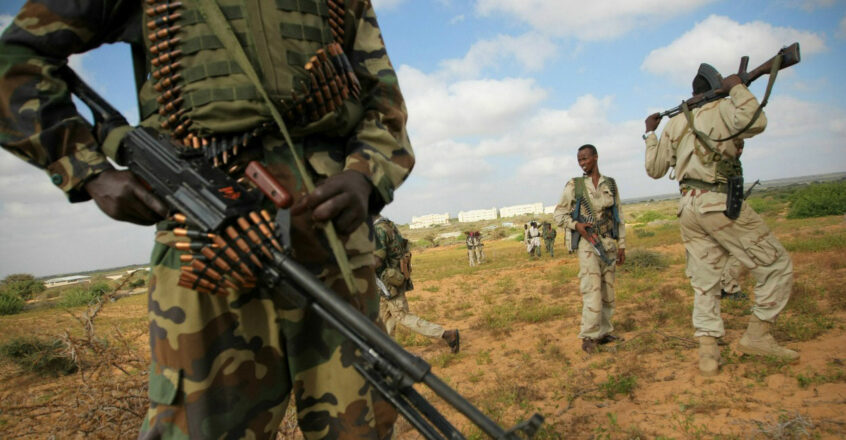
Sudan War Brings High-Profile RSF Defections:
This week, the Sudanese Armed Forces launched a major offensive across several axes in the North Kordofanregion, setting off intense fighting that has already left hundreds dead. As SAF and RSF forces struggle for dominance in North Kordofan, the SAF is welcoming a growing number of RSF defectors, including high-profile generalswho have become disillusioned with the RSF and its war aims.
In North Kordofan, the SAF offensive is focused on the road that links the cities of Dilling and El-Obeid, a strategically critical through-way that’s been a persistent thorn in the SAF’s side. In prior attempts, the SAF has failed to capture the corridor, “due to RSF ambushes, mine warfare, and entrenched positions, particularly around El-Debeibat, which has served as a major RSF stronghold”, according to the Sudan War Monitor.
While the SAF has previously attempted to get around those problems using offroad routes to encircle and threaten RSF forces, the military appears to be taking a different tack in this attempt. SAF forces have advanced toward Dilling on two routes, with one thrust seemingly intended to cut off and encircle nearby RSF positions, and the other meant to pressure Dilling more directly.
The SAF’s offensive relies on large numbers of fighters from the Joint Force, a paramilitary unit made up of mostly ex-Darfuri rebel groups. Highly mobile and experienced, the Joint Force has become a potent tool for the SAF, although its organization and relative independence have raised alarms over a potential repeat of the situation that allowed the RSF to seize control of part of the country. During the offensive toward Dilling, the Joint Force absorbed the loss of its regional operations commander, Major General Hussein Abdulrahman, as well as heavy vehicle losses.
The status of the offensive is currently unclear, with the Joint Force, the RSF, and the SAF all releasing conflicting statements, but the SAF and its allies do not appear to be on the brink of any imminent breakthrough. Instead, the RSF has demonstrated the continued strength of its resistance in the area, and, in turn, showed that it is likely to hold out against the SAF in North Kordofan for the near future.
Meanwhile, SAF leadership gloated this weekend after the defection of a high-profile RSF commander, Major General al-Nour Ahmed Adam, better known as “Al-Qubba”. On Sunday, al-Qubba was welcomed in the city of Dongola by SAF military chief Abdel Fattah al-Burhan and several key advisers, and Burhan reportedly gifted al-Qubba a personal vehicle during the exchange.
According to military sources, al-Qubba—one of the RSF’s founding members—chose to defect from the RSF after he was passed-over for a leadership position as the military governor of North Darfur, in a decision made by RSF senior leadership. Al-Qubba, a commander who led battles in and around El-Fasher, departed the area on April 9—reportedly just before the arrival of an RSF unit sent to arrest him.
While al-Qubba did not defect with enough followers or equipment to turn the tide on the battlefield, his decision is a major publicity blow for the RSF, at a time when support for the group is starting to unravel among elements of its paramilitary force. According to local sources, the RSF retaliated after al-Qubba’s defection by unleashing mass arrests and raids of the Mahameed ethnic group, in areas that al-Qubba had previously controlled.
Also this week, Pakistani sources told Reuters that the nation will pause a deal to supply weapons and jets to Sudan, after pressure from Saudi Arabia to terminate the agreement. The deal was worth roughly $1.5 billion, and was initially brokered by Riyadh, but Saudi leaders have recently been advised by Western allies to avoid interfering in proxy wars across Africa.
Image Credit: Image is dedicated to thepublic domain.
This Week on WarFronts:

Last week, WarFronts discussed the election of incoming Hungarian Prime Minster Peter Magyar, and the ouster of one of Russia’s closest European allies, in Viktor Orban. But although Magyar’s victory was followed by mass celebrations and a surprising lack of objection by either Russia or the Orban-friendly Trump administration, Magyar and his allies are raising alarms that a peaceful transition of power is not yet complete.
Days ago, Magyar alleged the widespread destruction of sensitive documents from Orban’s political administration, to conceal wrongdoing and try to avoid accountability. Magyar’s party has created an online anonymous tip line, but indicates that ministries, government offices, and Orban-linked companies are all destroying documents in large volumes.
Rare Mass Shooting in Kyiv:

A rare mass shooting in Kyiv left seven people dead and at least fourteen wounded, after a Russian-born man fired on passers-by and took several hostages inside a supermarket on Saturday. While the shooter was killed at the scene, and appeared to be a lone gunman, Ukrainian authorities have opened a terror investigation.
The shooting took place in the capital city’s Holosiivskyi district, a relatively wealthy area known for its lush natural park zone. While the death toll was initially reported at six, not counting the shooter, a seventh victim was reported dead on Monday after succumbing to severe wounds in hospital. Seven people, including a child, remain hospitalized.
Ukrainian officials have not yet released a motive for the shooter, 57-year-old Dmytro Vasylchenkov. Authorities noted, however, that the man had previously lived in Ukraine’s eastern Donetsk region, now mostly occupied by Russian forces, and had lived in Russia for ten years between 2007 and 2017, before moving to Bakhmut and then Kyiv.
According to The Guardian, Vasylchenkov had previously posted antisemitic and anti-Ukrainian content on social media, had denied Ukraine’s right to exist, and had advocated ethnic cleansing using methods reminiscent of the Holocaust of World War II. Any links to Russian intelligence or security services have not yet been publicly acknowledged.
Shootings like these are relatively rare in Ukraine, even during the ongoing conflict. While two Ukrainian public figures were shot dead in Lviv in separate incidents in 2024 and 2025, larger-scale killings are exceptionally uncommon. Ukrainians, however, expressed to global media that they fear shootings like these may be more common in the future. Recently, Ukraine has seen a wave of violence against draft officers, as Kyiv works to enforce conscription of fighting-age men.
The shooting has also thrown doubt onto the capabilities of Kyiv’s police force, after a video of the incident showed multiple officers fleeing the scene. The national head of Ukraine’s patrol police, Yevhen Zukhov, resigned in the wake of the shooting, and condemned officers who “acted unprofessionally and disgracefully”. Ukraine’s Interior Minister called the officers “a disgrace to the entire system”; investigations into the nation’s police force are forthcoming.
Image Credit: "Kyiv skyline" by Sergey Galyonkin is licensed underCC BY-SA 2.0.
What We're Reading:
Also this week on WarFronts, our team dug into a strange budget allotment by the US Pentagon, which directed nearly $55 billion—roughly equivalent to the 2026 budget for the US Marine Corps—to a little-known program called the Defense Autonomous Warfare Group (DAWG). As we laid out, this unusual endowment appears to set the stage for Washington to turn DAWG into a dedicated drone-warfare branch of the US military, within years or even months.
Already, US sources are working on drone-centered warfare proposals that would leverage the precise capabilities that DAWG seems to focus on. In this report by the Center for a New American Security, authors Stacie Pettyjohn and Molly Campbell mapped out a drone-enabled defense of Taiwan, using what the authors call a “Hellscape” concept. The report provides a detailed look at the ways in which a combination of long-range aerial, surface, and underwater drones, plus shorter-range first-person-view drones, multirotors, drone interceptors, and mobile and loitering surface-to-air missiles could force a Chinese invasion force to give up an attempt to seize Taiwan.
Fronts.Co Feature:
This week, Fronts.co hosts an exclusive articleby Illya Sekirin, advisor to Ukrainian High Command and a former front-line drone operator.
The article provides a detailed look at several years of successes and struggles in Ukrainian drone adaptation, with a special focus on the missed opportunities of Ukraine's 2024 Avdiivka campaign.
This exclusive is free to read on Fronts.co, with no account needed. Thank you, as always, to those who subscribe.
Around the World:
On Tuesday, Japan on the export of lethal weapons, clearing the way for one of the world’s wealthiest and most technologically sophisticated arms producers to become a major player in global markets. Japan had previously worked through loopholes to export a limited quantity of lethal fighting equipment, but a complete end to the country’s export ban is expected to usher in a defense-industrial boom across the Indo-Pacific and beyond.
Ethiopia’s Tigray People’s Liberation Front (TPLF) announced on Sunday that it will of the Tigray region’s government, in a move expected to end a hard-won peace deal with the federal government in Addis Ababa. The Tigray War of the early 2020s was among the deadliest conflicts of the 21 st century to date, and the TPLF’s decision raises the specter of an imminent return to fighting. The TPLF accused Ethiopia of provoking armed conflict in Tigray, among other abuses.
The Indonesian government acknowledged a clash with separatist rebels in Central Papua province earlier in April, where fifteen people were killed and seven were wounded. Indonesia did not acknowledge the share of civilians killed in the battle, but the state-run National Human Rights Commission acknowledged that twelve civilians were shot dead during an operation on April 14, including women and children, with dozens of others wounded.
Ukraine struck and sparked a fire at the key Russian port and refinery of Tuapse, on the Black Sea, just hours after Russia extinguished a days-long fire at Tuapse after a prior drone strike on April 16. Ukraine’s latest strike demonstrates an ability to hit Tuapse at will; five of Russia’s ten largest refineries are currently damaged or destroyed.
A by Colombian rebels left three soldiers dead and two injured on Monday, in a municipality on the Ecuadorean border. The strike was blamed on an organization called Comandos de la Frontera, a splinter group with ties to the ex-guerrilla FARC. In Colombia, fifty-eight soldiers and police officers were killed by rebel drones in 2025.
A French soldier was killed as part of a United Nations peacekeeping force in southern Lebanon on Saturday, when a position near the village of Ghandouriyeh came under small-arms fire. Three other French soldiers were wounded in the attack, two of them seriously; French President Emmanuel Macron indicated that Hezbollah was behind the shooting.
Ugandan and Congolese soldiers announced the rescue of at least two hundred captive civilians in a raid on an Islamic State-linked militant camp in the eastern Congo last week. The captives were held by the Allied Democratic Forces, a movement known for exceptionally brutal attacks against the civilian populations of both countries.
Pro-Russia Bulgarian ex-president Rumen Radev and his political coalition surged to a landslide election victory this weekend, with vast leads over Bulgaria’s incumbent coalition leader and its largest pro-Europe party, respectively. While Radev is not expected to become a spiritual successor to recently ousted Viktor Orban within the European Union, he is expected to pursue a more independent foreign policy for Bulgaria itself.
Romania entered what is expected to be a protracted political crisis this week, when its largest coalition party, the Social Democrats, withdrew their support from current PM Ilie Bolojan. Social Democrat opposition appears to be a result of political pressure from the Romanian far right, which has enjoyed a recent opinion-polling surge.
Somalia re-launched its maritime trade-ship registry after several decades of refusal to register new vessels under the Somali flag. According to Somali-affairs and illicit-finance expert Guled Wiliq, Somalia’s new registry appears to be optimized to welcome Russian and other international shadow-fleet vessels, while spoofing traffic through Russian and occupied-Ukrainian maritime trade routes.
Prominent Emirati thinker Abdulkhaleq Abdulla suggested on Sunday that the Emirates should consider closing US bases on its soil, calling the bases “a burden and not a strategic asset”. While Abdulla does not wield decision-making authority in Abu Dhabi, he is one of a small number of highly influential voices known to shape or reflect evolving Emirati security policy.
Ukrainian leader Volodymyr Zelenskyy is holding conversations with several European nations to create an anti-ballistic-missile air-defense system, according to comments by Zelenskyy on Sunday. Ukraine’s interest in anti-ballistic-missile systems follows a clear and growing interest in cost-efficient Ukrainian air-defense technology, in Europe and the Middle East.
German outlet Handelsblatt reported on Saturday that efforts to resolve a dispute between French and German companies over the Future Combat Air System (FCAS) sixth-generation fighter jet have failed. While the two nations’ political leadership can intervene, sources told Reuters that an outside reviewer will conclude a jointly built fighter jet is not feasible.
On Sunday, Japan and Australia signed a contract to deliver the first three of an incoming fleet of eleven Japanese-made naval frigates, an upgraded version of the Mogami-class ship known as the FFM. Taiwanese media reports that Taipei may also purchase several copies of the FFM, while Australia will build another eight in a shipyard on Australian soil.