
WarFronts Weekly 6.23.2026.
🟨 WarFronts Weekly | De la Espriella Wins Colombian Election & More
Evan Moloney • June 23, 2026
"In my government there will be no peace processes. Any bandit who does not surrender will be killed, as is the law.”
-Abelardo de la Espriella, President-Elect of Colombia.
De la Espriella Wins Colombian Election:
After a tougher-than-expected challenge from leftist candidate Ivan Cepeda, hard-right Colombian outsider Abelardo de la Espriella won the nation’s presidential runoff election. Campaigning on pledges to institute a sweeping crackdown against rebel groups and organized crime, De la Espriella will now have to prove that El Salvador-style security measures can translate to Colombia’s complex threat environment.
De la Espriella surged to first place in the waning days of Colombia’s first-round election, defying polls that placed Cepeda, an ally of current President Gustavo Petro, in the lead. In the end, De la Espriella captured 49.7% of the national vote, with 48.7% going to Cepeda. Petro has vowed a recount, and has raised the specter of electoral interference, but the vote is likely to stand.
Unlike Petro, who was the first left-wing leader in Colombia’s history, De la Espriella takes a highly aggressive approach on national security, promising to use lethal force against protesters and kill criminals across the nation. Inspired—both rhetorically, and in his appearance—by Salvadoran strongman Nayib Bukele, De la Espriella is expected to institute a Bukele-style campaign against organized criminal groups.
Applying Bukele’s approach to Colombia, however, will be difficult. Colombia faces a multidimensional array of rebel and non-state threats, including dissident insurgent factions, transnational organized crime groups, and national cartels that control significant portions of Colombia’s territory. Our team recently explained the challenges that De la Espriella is likely to face, in this episode.
Unlike Bukele, De la Espriella will draw on the support of a key ally, US President Donald Trump, from the moment of his inauguration. Trump endorsed De la Espriella’s campaign in the final days of the runoff, and has sought to support or lead security operations across Latin America, from Mexico to Ecuador to Cuba and, of course, Venezuela. De la Espriella has mirrored Trump’s rhetoric on Latin American ‘narcoterrorists’, and may welcome direct support from US forces.
On his first day, De la Espriella expects to issue ninety decrees, many of which will allow him to quickly institute a state of emergency and other measures to grant himself broad latitude. He has also promised to extradite Gustavo Petro to the US for prosecution, to withdraw from the United Nations, to build ten mega-prisons in the style of El Salvador’s notorious CECOT, and to capture or kill at least ten major crime leaders during his first three months in office.
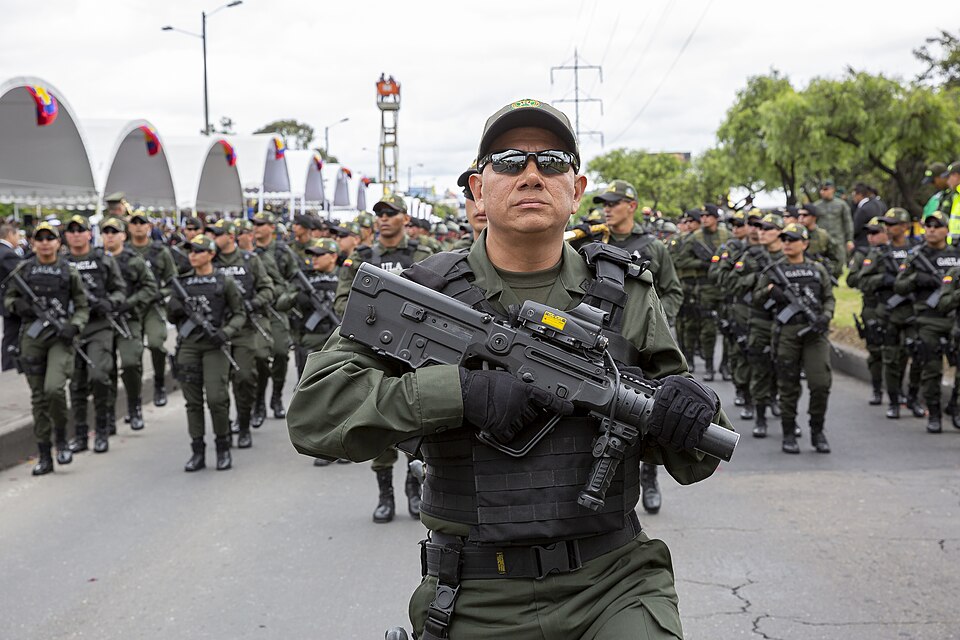
Image Credit: “Grupo Gaula Policía de Colombia” by Policía Nacional de los Colombianos is licensed underCC BY-SA 2.0.
This Week on WarFronts:
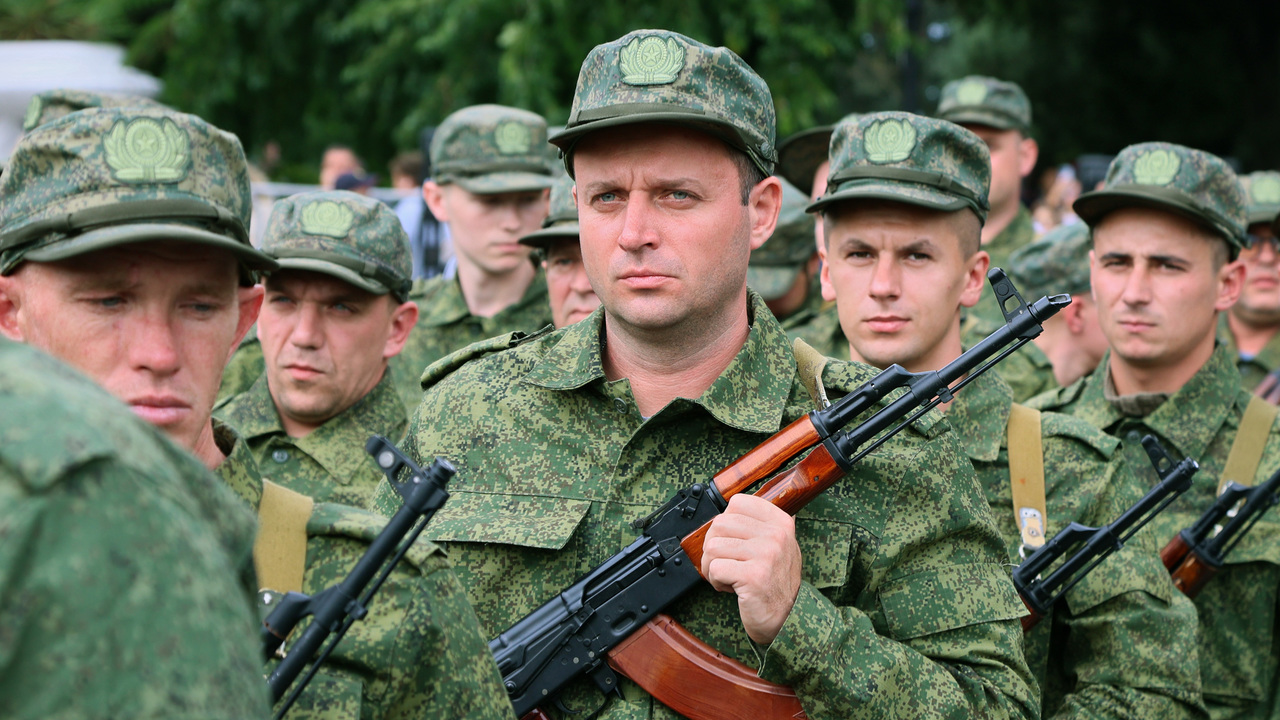
On Monday, Fronts published our latest free-to-read article by a Ukraine war expert, best known by the online moniker Jompy, on the likelihood of a Russian military mobilization in 2026. With Moscow facing compounding crises in manpower, logistics, and other areas, volunteer enlistment has collapsed at precisely the wrong time for the Russian command. Facing a Ukrainian strategic shift, in which drone teams and other combat units are working to kill or wound more soldiers than Russia can recruit, the Kremlin may have little choice but to begin an extremely unpopular mobilization effort in the near future.
Bolivia Enters State of Emergency:
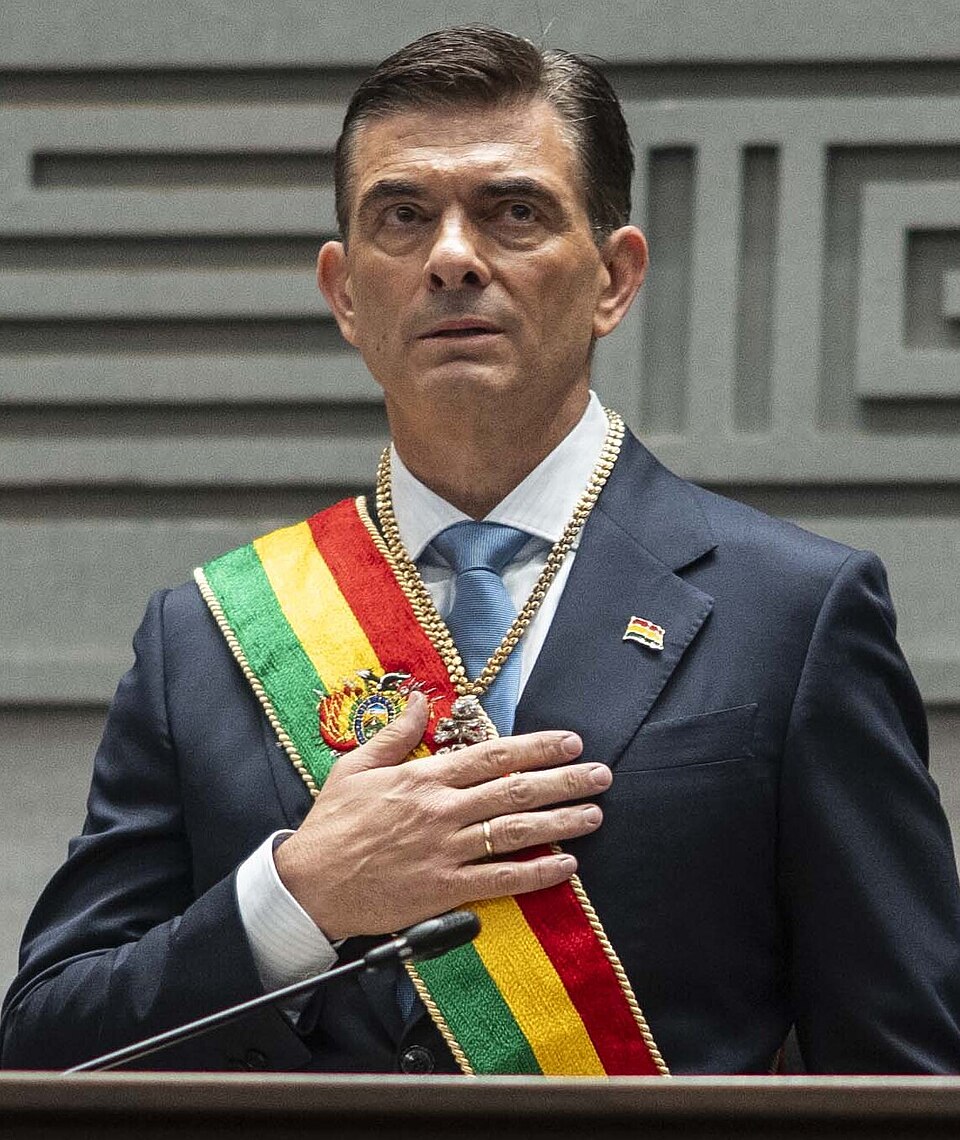
After several weeks of anti-government protests, Bolivian President Rodrigo Paz declared a state of emergency on Saturday, deploying soldiers and bulldozers to destroy roadblocks that protesters built across much of the country. While Paz’s decision will bring a short-term semblance of normalcy for Bolivian commuters, the state of emergency has become its own flashpoint for protesters, who view the order as an egregious government escalation.
Bolivia’s protests have continued for nearly eight weeks, with at least fourteen people dead as a result of clashes with police. At the core of the protest movement is ex-president Evo Morales, a polarizing figure with close ties to the indigenous groups that have erected roadblocks, blockaded the supply of food and medicine to vulnerable areas, and allied with unions and other key groups to paralyze the country.
Among other reforms, the protesters have demanded an end to liberalizing economic reforms, as well as the resignation of President Paz, less than one year after his election. Evo Morales and other opposition figures have accused Paz of submitting to the will of the US government; Morales’ supporters also hope to deliver their leader a reprieve from ongoing law-enforcement efforts to detain him on charges of trafficking a minor.
Paz and his allies had avoided declaring a state of emergency until now, in an attempt to signal openness to limited reforms and disincentivize escalation from the protest movement. Now, however, Paz claims that the protesters have gone too far, and that their demonstrations have evolved into an organized effort to destabilize the country.
Under the state of emergency, Paz will be able to leverage the Bolivian military to protect infrastructure, ensure the delivery of essential goods to their destinations, and otherwise assist law enforcement action across the country. On Saturday, the military assisted Bolivian police in clearing roadblocks, despite clashes with protesters in several areas.
Opposition leaders, however, have long warned that by instituting a state of emergency, Paz risks escalating tensions even further. Unions and pro-Morales groups have signaled that they do not intend to back down, and that they believe this is a critical opportunity to create real change within the government.
One key group to watch is the Bolivian Workers’ Confederation, the country’s largest union. On Friday, the group agreed to a deal with Paz to reduce tensions, in exchange for concessions from the government, but at that time, Paz had not yet announced his state of emergency. While the union deal may have encouraged Paz to lay down the law, public pressure may force the labor group to reverse course.
Image Credit: “Presidente de la República, Gabriel Boric Font, asiste a la asunción del Presidente de Bolivia, Rodrigo Paz” by Dirección de Prensa, Presidencia de Chile is licensed underCC BY 3.0 CL.
What We're Reading:
After the 2024 fall of long-time dictator Bashar al-Assad, the nation of Turkey has emerged as a dominating influence over the affairs of its southern neighbor, Syria. Ankara shares deep ties with Syria’s ruling transitional government, and has leveraged those ties in a growing proxy battle for regional influence against another Syrian neighbor, Israel.
In this recent article for New Lines Magazine, analyst Elizabeth Tsurkov provides a more nuanced look at the relationship between Ankara and Damascus, where Syrian authorities work to push back against Turkey’s influence at times, but remain dependent on Turkey as their primary security guarantor.
Our WarFronts/HomeFronts Team is proud to announce the launch of Fronts.co, our brand-new subscriber service.
Around the World:
Ukraine and Russia traded strikes on Monday morning, with Russian drones killing six people across Ukraine, including three in the northern Sumy region. Russian authorities reported that over eighty drones were brought down on their way to Moscow; elsewhere across the country, Ukraine destroyed a major space-communications array and a semiconductor production facility critical to the construction of missiles. Over the weekend, Ukraine also conducted a record-breaking strike against an oil refinery in western Siberia, over 2,000 kilometers from the Ukrainian border.
Also in the Ukraine war, Russia announced on Sunday that all fuel deliveries to civilians on the occupied isthmus of Crimea have been suspended, with remaining fuel allotted to military forces and emergency services. The strikes have continued to isolate Crimea from the rest of Russian occupied territory, including with hits against key depots and storage sites within the last several days. On Tuesday morning, Ukraine hit a key , cutting off the power supply for approximately half of the isthmus. Meanwhile, Ukraine appears to have temporarily stabilized the city of Kostyantynivka, the southern anchor of Ukraine’s critical fortress belt, but Russian forces are consolidating their positions in parts of the city, while continuing to infiltrate areas that are under Ukrainian control.
In Sudan, a tribal militia of the city of Kauda in the Nuba Mountains, previously the stronghold of the Sudan People’s Liberation Movement – North (SPLM-N) since 2011. While the SPLM-N is a relatively minor faction in the Sudanese Civil War, the group and its leader, Abdel Aziz al-Hilu, may call upon their allies in the paramilitary Rapid Support Forces for aid. If so, the RSF may assist the SPLM-N in large-scale reprisal attacks against the tribal group that took the city, which hails from the Otoro ethnic group. An RSF reprisal, however, would likely involve acts of ethnic cleansing, similar to the attack now expected at the besieged city of El Obeid.
Two roadside bombs in northwest Pakistan’s Khyber Pakhtunkhwa Province left at least seven people dead and three injured on Sunday, in an attack that was likely the work of the Pakistani Taliban. Both explosions took place in the district of Bannu, where Pakistani Taliban attacks are common; the latest blasts come as tensions are rising again between Islamabad and Kabul, where the ruling Afghan Taliban are accused of supporting the Pakistani insurgent group with India’s help.
After a recent string of attacks across Syria, the Islamic State took credit for an attack near the city of Manbij on Saturday, where two Syrian soldiers were gunned down by unidentified attackers. The Islamic State is continually gaining strength in Syria, where government takeovers of formerly Kurdish-held lands, Western disengagement, and Turkish-Israeli power struggles have contributed to a worsening security breakdown.
Thirteen people were killed and several dozen others were injured at an explosion at Ras Laffan Industrial City in Qatar, the globally relevant liquefied natural gas (LNG) facility targeted by Iran during recent hostilities. The blast was accidental, but took place during a test intended to bring parts of the facility back online. The explosion occurred at a sub-complex that services Qatar’s domestic energy market.
Somali president and aspiring autocrat Hassan Sheikh Mohamud failed to gain the support of Kenyan leader William Ruto, in his attempt to extend his term past constitutional limits. Meanwhile in Somalia’s South West State, local sources report intense fighting across the weekend, as pro-Mogadishu forces clash with fighters loyal to the state’s former leader, who was forced out of his post months ago and has since become a key opposition figure.
British Prime Minister Keir Starmer announced that he will resign in the coming months, in a decision that will likely transfer power to recently elected parliamentarian Andy Burnham, the former mayor of Greater Manchester. While Burnham is unusually popular among his Labour Party colleagues, his position on defense issues has remained relatively vague. Burnham, or another new premier, will be Britain’s seventh in ten years.
Spanish ex-politician Jose Luis Abalos, former Transport Minister, was sentenced to twenty-four years in prison on charges including bribery, embezzlement, criminal organization, and more. Abalos is the first of an upcoming wave of sentencings against ex-officials of Spain’s ruling Socialist Party, many of whom enjoyed close ties with Prime Minister Pedro Sanchez; the premier has yet to be named personally in any corruption cases.
Ethiopian Prime Minister Abiy Ahmed’s Prosperity Party won a comfortable legislative majority in the nation’s recent election, as confirmed by Ethiopia’s elections board this Sunday. The majority was expected, in a nation where elections are neither free nor fair, but signals the Ethiopian public’s lack of resistance to authoritarian maneuvers by Abiy and his allies, as the nation approaches a likely war in the Tigray region.