
WarFronts Weekly 6.9.2026.
🟨 WarFronts Weekly | United States Prepares Offer to Buy Chagos Archipelago & More
Evan Moloney • June 9, 2026
"Mauritius's position remains unchanged: its sovereignty over the Chagos is non-negotiable."
United States Prepares Offer to Buy Chagos Archipelago:
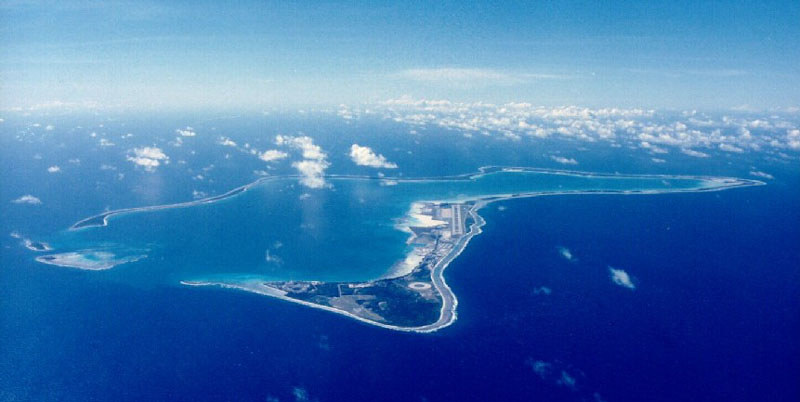
Over the last several months, the United States and the United Kingdom have been embroiled in an ongoing dispute over the Chagos Islands, where the United States relies on a key Indian Ocean base on the Chagossian island of Diego Garcia, leasing rights from the British government. After London agreed to transfer sovereignty over the Chagos Archipelago to Mauritius, the United States is reportedly preparing an offer to buy the entire archipelago outright.
First reported by The Telegraph, Washington’s alleged proposal would see the United States circumvent the ongoing deal between Mauritius and the UK, allowing the sovereignty exchange to proceed as planned. Instead, the US would wait until the deal is complete, before purchasing the archipelago directly from Mauritius after negotiations.
According to the report, the US is exploring several options to acquire the islands, where a sovereignty transfer is now on indefinite hold, following London-Washington friction and the added complications of the ongoing war in the Middle East. While the plan to purchase the archipelago is not believed to be a leading option for Washington, it is among a range of proposals put forward by US Treasury Secretary Scott Bessent.
While the transfer of Chagossian sovereignty to Mauritius is regarded in parts of the globe as a post-colonial return to normalcy in the Indian Ocean, the US has raised alarms over the specter of Chinese espionage against the base on Diego Garcia, where the US bases highly sensitive assets and enjoys unparalleled proximity to the Middle East and South Asia. Mauritius is an ally of China, and also enjoys close ties with India.
According to Mauritian authorities, the US proposal has not yet made its way to the national government, and Mauritius has not been approached in any other way by the US, regarding this particular proposition. The Mauritian government has insisted that its sovereignty claim to the islands is non-negotiable.
Notably, the plan to hand over the archipelago to Mauritius has not garnered unanimous support from the global Chagossian diaspora. While some prominent Chagossian advocates have continued to push for a return to the islands, Chagossians in Mauritius have long faced systemic poverty, overcrowding, and chronic unemployment, along with social discrimination. Notably, the Chagos Archipelago has never been Mauritian territory.
The US proposal is not known to include any new provisions on Chagossian resettlement, although past US positions would suggest that the population would struggle to resettle on any island territory owned by Washington.
"Diego Garcia - Landing Approach" by Serendigity is marked with Public Domain Mark 1.0.
This Week on WarFronts:
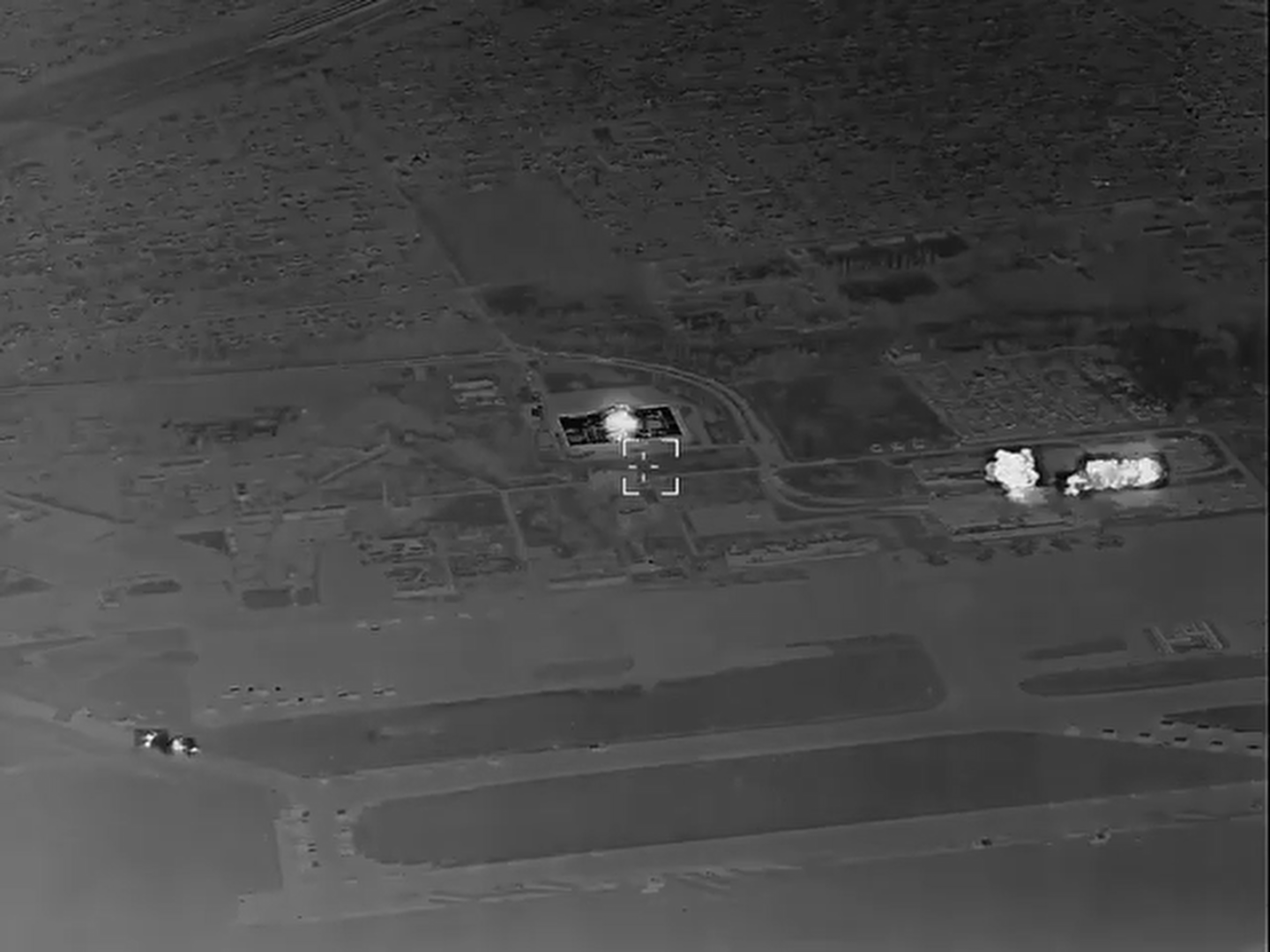
Ukraine’s expanding campaign of mid-range strikes against Russian forces, especially in Crimea and other occupied territories, has crippled Russian logistical operations and undercut Moscow’s anticipated spring and summer offensive. Under the fog of war, however, Ukraine’s specific tactics, tools, and targets have received less attention.
To understand the finer details of Ukraine’s offensive, check out this recent report by open-source intelligence expert Jakub Janovsky, via Fronts.co. The report is free to access, and provides an in-depth look at Russian losses and attempts to respond, as well as Ukraine’s likely next moves. Fronts.co is honored to work with Mr. Janovsky, and the many other experts on our growing list of contributors.
Killings in Kashmir Ahead of Major Protest:
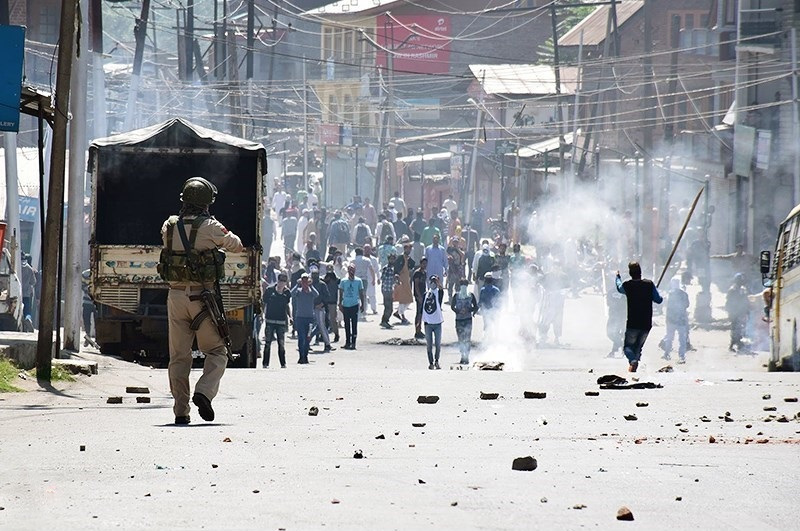
Today, locals in Pakistan-administered Kashmir are expected to take to the streets in a massive protest by an outlawed political organization, the Joint Awami Action Committee or JAAC. Ahead of the march, however, police and protesters have faced off in clashes that have left at least eleven people dead, with the true toll expected to rise in the coming days.
The JAAC rally is meant to amplify local demands for greater political rights, in a system that opposition members say is heavily biased toward Kashmiri refugees living in Pakistan. Those refugees are entitled to twelve legislative seats in the region, but locals insist that the seats give refugees disproportionate influence and disenfranchise locals.
Those seats were kept safe in a Sunday ruling by the regional Pakistan-run government, which decreed that the seats are constitutionally protected and cannot be abolished without an amendment. In response, JAAC leaders announced a rally for Tuesday; the group has a history of organizing large protests, some of which have become violent. The JAAC had been designated a proscribed terrorist group just days before, in a ruling announced on Friday.
On Sunday and Monday, however, Kashmiri protesters rallied in advance, across several cities and large towns in the region. According to regional authorities, protesters opened fire on security forces in the city of Rawalakot and blockaded a military hospital, prompting a response from law enforcement. Police also claimed that protesters set fires and damaged property.
The clashes left at least eleven people killed, including four police officers, a bystander, and six protesters. A local sector commissioner claims that protester gunfire was responsible for the police and bystander deaths. A local police chief indicated at least fifty protesters and twenty-three police wounded, with another thirty people arrested.
Pakistani authorities clearly anticipate greater violence, and have called for foreigners to leave the region by today. According to police, the JAAC have only inflamed tensions further over the last forty-eight hours, characterizing police actions as a massacre and alleging that in truth, protesters used automatic weapons and petrol bombs against law enforcement.
Image Credit: “Police in Kashmir confronting […]” by Tasnim News Agency is licensed under CC BY 4.0.
What We're Reading:
China’s nuclear weapons program is expanding at a rate unmatched by any nation since the height of the Cold War, and as Beijing’s arsenal accumulates new warheads, its launch infrastructure must expand to match.
This Reuters investigation reveals the construction of over eighty launchpads in China’s northwestern desert, likely to facilitate the use of mobile missile launchers and air-defense batteries. The immense scale of construction suggests that China may be working on a much larger, hardened complex, to ensure second-strike retaliatory capability against the United States or any other country that initiates a nuclear exchange.
Our WarFronts/HomeFronts Team is proud to announce the launch of Fronts.co, our brand-new subscriber service.
Around the World:
Violence flared between Israel, Hezbollah, and Iran over the weekend, after Israeli airstrikes impacted the Beirut suburb of Dahiyeh, a Hezbollah stronghold. The attack prompted direct Iranian retaliation against Israeli territory, the first such attack since the two nations agreed to a ceasefire in April. Israel responded with airstrikes against several Iranian cities, impacting targets that included a petrochemical plant and several internal Basij paramilitary facilities. During the exchange, Yemen’s Houthi rebels announced a Red Sea blockade of Israeli vessels, although Houthi forces have not yet launched an attack. Both Iran and Israel had agreed by Monday that they will draw down tensions for now, although Israel later resumed airstrikes in Lebanon.
Somali forces re-established control in Mogadishu over the weekend, following a day of explosive violence between federal forces and opposition-allied militia groups. According to local sources, thirteen people were killed in the fighting, and thousands displaced. Turkish mediators have attempted to engage all sides in a dialogue, although the federal government has been more focused on weapons seizures, reporting the discovery of heavy weapons and drones at opposition strongholds. On Sunday, Somalia’s ambassador to Ethiopia indicated that Mogadishu may renew its efforts to establish federal authority in several autonomous regions, including breakaway Somaliland.
Tensions are spiking in the West Bank this week, after Israeli troops shot at a car and killed a seven-month-old Palestinian infant on Saturday; the child’s mother is in critical condition. On Saturday, a Palestinian man with Israeli citizenship rampaged across several towns in central Israel, killing a reservist and wounding five other people. The shooter was killed by police, while an accomplice acting as his driver was arrested. Israeli settler attacks across the West Bank have recently intensified, according to the United Nations.
Russia accused Ukraine of killing five Azerbaijani crew members aboard two vessels headed for the occupied ports of Mariupol and Berdyansk, with authorities in Baku confirming that at least five citizens had been killed. The strikes represent a new tactical shift for Ukraine, striking cargo ships that Ukraine alleges were involved in the theft of Ukrainian grain. Also this week, Ukraine successfully struck at least three freight locomotives moving through the occupied territories, further expanding Kyiv’s efforts to cut off Russian resupply in that area.
In related news, Ukrainian partisan fighters indicated that Russian troops are pulling back from the Kinburn Spit in Mykolaiv Oblast, an area that Russia has controlled since June 2022. The spit is an exposed sandbar where Russia has used its troop presence to threaten Black Sea shipping and keep pressure on nearby Ukrainian positions. If accurate, the withdrawal would represent the first major evacuation among Russian soldiers due to Ukraine’s sustained mid-range campaign. The claim, however, remains tenuous, by nature of its sourcing from Ukrainian partisan units.
Ukrainian President Volodymyr Zelenskyy claimed that Russian oligarch Roman Abramovich had visited Kyiv in recent days, offering to convey a message to Moscow on the prospects of an eventual peace. Per Zelenskyy, Abramovich stated that he would convey a direct message to Russian President Vladimir Putin; Abramovich reportedly traveled with the broad support of the Russian oligarchy, and would not have been likely to make the trip without direct approval from Putin himself. Zelenskyy reported that he reiterated Ukraine’s stance that the Donbas territory will not be abandoned.
Peruvian runoff candidates Keiko Fujimori and Roberto Sanchez are in a near-tie after an extended vote count, signaling that the country’s hotly anticipated election may not result in an easy conclusion to Peru’s extended political crisis. While Fujimori is slightly behind in the total vote count, she is expected to contest an electoral loss in court, while leftist polling leader Sanchez will face significant legislative challenges in a Fujimori-dominated Congress.
Armenian Prime Minister Nikol Pashinyan and his Civil Contract party won re-election with just under fifty percent of the vote total, securing an outright parliamentary majority in the upcoming term. Pashinyan’s re-election was a test of the leader’s shaky grip on power amidst alleged Russian influence operations; Armenia’s two leading pro-Russian opposition groups improved their total vote share, and will each enter parliament.
A French national named Yann Vezilier has been sentenced to twenty years of hard imprisonment in Mali, after being convicted of acting on behalf of French intelligence to mobilize opposition against Mali’s military government. The French government insists that Vezilier is innocent, while his case has been used as a political prop in Mali to raise perceptions of Western involvement in the nation’s security crisis.