
WarFronts Weekly 9.1.2026.
🟨 WarFronts Weekly | Munity in Niger Narrowly Misses Military Junta & More
Evan Moloney • September 1, 2026

“The jihadist groups will be the only winners in this situation.”
Mutiny in Niger Narrowly Misses Military Junta:
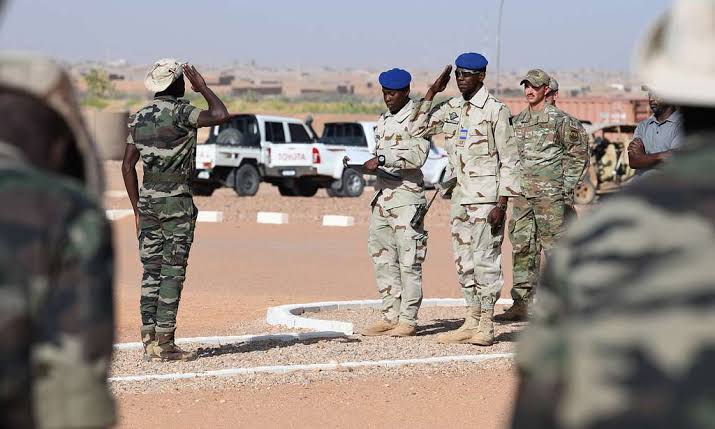
This Saturday, the nation of Niger was paralyzed by a mutiny among elements of the nation’s military, which morphed rapidly into an apparent coup attempt over the course of the weekend. Although the situation in Niger has stabilized for now, the uprising is the latest sign that Niamey risks implosion under the sheer pressure of a multidimensional, transnational jihadist offensive.
Underscoring the role of the larger Sahel crisis, the weekend mutiny appeared to originate with units fighting in Niger’s embattled regions of Tillaberi and Dosso. There, the al-Qaeda-linked insurgency JNIM and the Islamic State – Sahel Province (IS-Sahel) each battle the Nigerien military, as well as each other. Those troops are chronically under-resourced and constantly at risk of attack, with minimal and unreliable logistical support.
The coup attempt appeared to grow in strength for the first half of the weekend, especially once the mutineers captured a key military airbase at Niger’s international airport in Niamey. From there, junior officers led their troops in confrontations that are believed to have left dozens, if not hundreds dead, prompting at least one defection from a high-profile commander. Special-forces troops are rumored to have fought alongside the mutineers.
The uprising was slowed, however, by the intervention of Niger’s Presidential Guard, an elite fighting force with access to advanced weaponry. The Presidential Guard was able to protect both Niger’s leader, Abdourahamane Tiani, and the nation’s state television broadcaster, fending off an attack against the presidential palace. After their initial attack was repelled, the mutineers tried to solicit further support from across the Nigerien military, in a standoff that divided Niamey for most of the next day.
The coup attempt was put to rest when Russia’s paramilitary Africa Corps finally chose to intervene, taking the side of the Nigerien regime—but only once the situation had partially stabilized. Russia stations approximately 200-300 Africa Corps personnel in Niger, and lent both air and ground support in its effort to neutralize the attackers. Russia’s hesitation, however, is likely to result in long-term fractures with the Niamey government, which welcomed Moscow largely on the expectation that the Africa Corps, and their Wagner Group predecessors, would ensure regime stability.
The coup attempt was notable for one other reason: a prompt show of support from Algeria, which usually avoids getting involved in international affairs even in North Africa. A day after the coup, Algeria dispatched four Su-30 fighter aircraft to its southern neighbor, along with an Il-78 air-to-air refueler. Algeria announced that the deployment will be used to help stabilize Niger, but did not specify the extent of its expected role in the country.
Image Credit: “A Forces Armées Nigeriennes (Niger Armed Forces) member graduates […]” by Defense Visual Information Distribution Service is dedicated to the public domain.
This Week on Fronts:
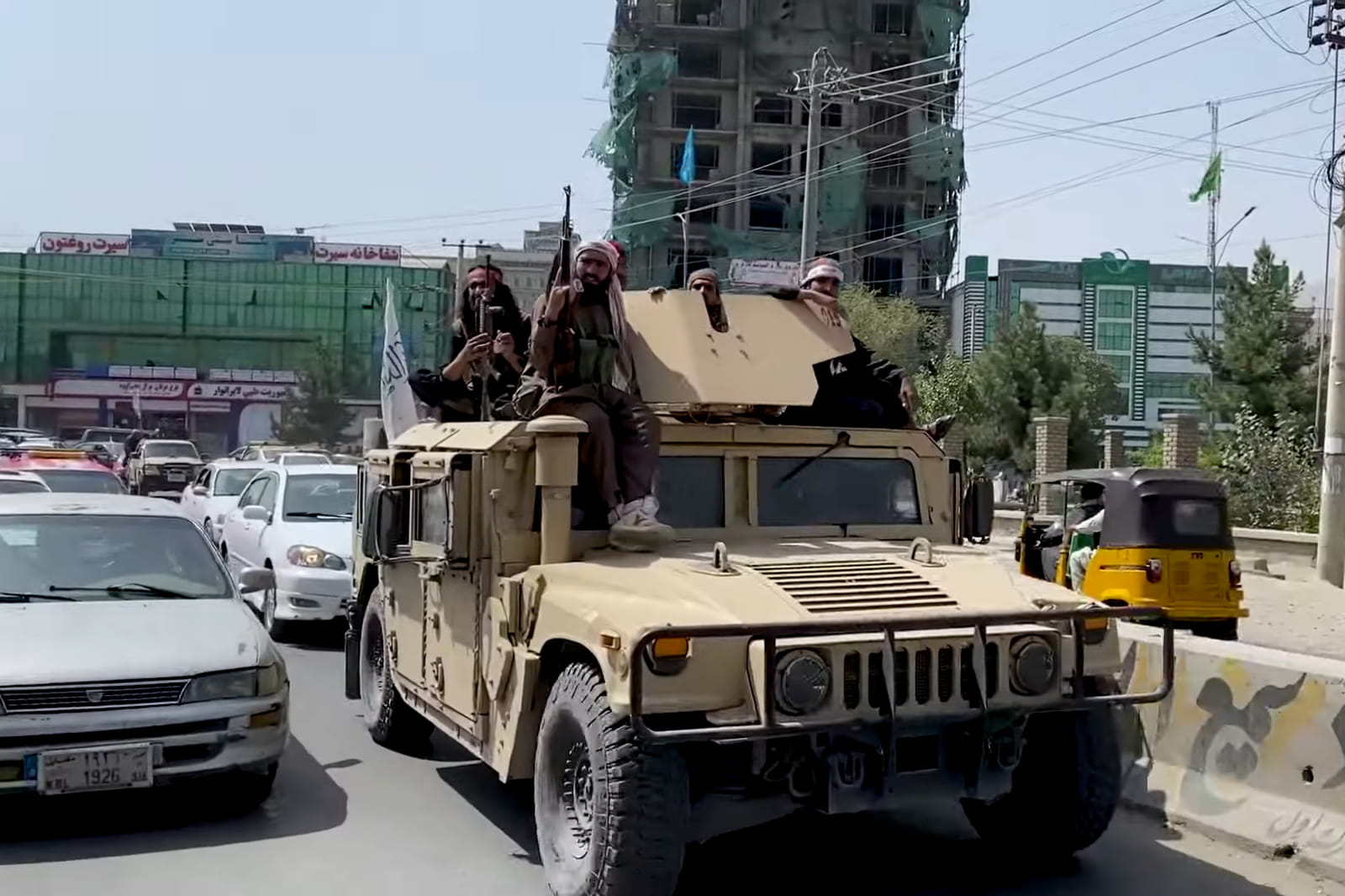
The Afghan Taliban is fracturing quickly along ethnic lines, after the group’s centralization around its Pashtun leaders in Kabul and Kandahar has led non-Pashtuns to violently express their resentment.
This, according to global terrorism expert and Fronts contributor Paweł Wójcik, who wrote his latest Fronts analysis this week about the Taliban’s growing internal split.
With pressure rising from China, Iran, Pakistan, the Islamic State, and several domestic insurgent groups, the beleaguered Taliban is struggling to maintain control—with “yet another series of internal crises and bloodletting” on the horizon. Read Pawel’s article here, for the details.
Israel, Greece Ink Billion-Dollar Air-Defense Deal:
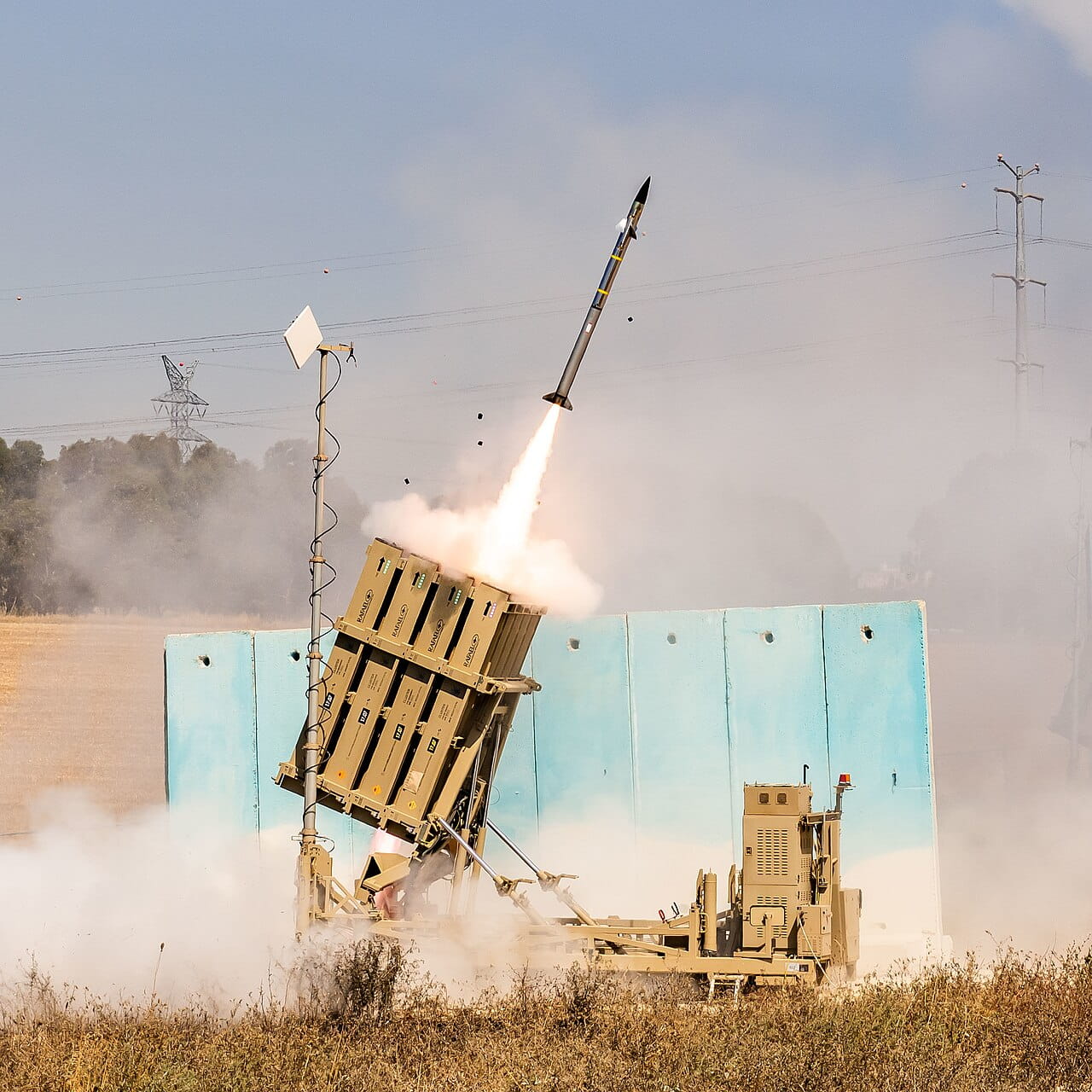
The nation of Greece inked a multi-billion-dollar deal with Israel this week, to secure Jerusalem’s assistance in constructing a multi-layered air defense system called the “Achilles Shield”. While international coverage of the deal has focused mainly on Greek military modernization, the agreement is more relevant for its value in integrating Israeli and Greek defense against a common enemy, Turkey.
The deal will see Greece accept three Israeli air-defense systems: the anti-ballistic-missile David’s Sling, the Spyder system to engage low-flying threats, and the Barak MX, a versatile interception system that selects one of four interceptor types to respond to a discrete threat. Valued at $3.5 billion USD, the deal is one of Israel’s largest in recent years, and will place Israeli air defenses alongside F-35 stealth fighters and French- and Italian-made frigates.
The timing of the deal, however, is almost certainly not accidental. Rival Turkey—engaged in a growing cold war of Middle East influence with Israel, and still eyeing Greek forces in a frozen conflict in Cyprus—recently signed a trilateral mutual defense pact with Saudi Arabia and Pakistan. Other nations are looking to join the deal, and Bangladesh has publicly expressed interest.
Israel, meanwhile, prefers not to advertise or formalize its own strong links with regional partners, particularly the United Arab Emirates, and as a result, Jerusalem has struggled to present a rhetorical counter to the new Middle Eastern alliance. Greece, however, is an ideal ally to openly signal strategic alignment, both because of the two nations’ shared adversary, and their shared allies via the United States, NATO, and the European Union.
Israeli Defense Minister Israel Katz acknowledged as much, citing “actors with hegemonic ambitions” and “shared regional challenges” as the basis for the agreement. Greek leaders remained silent on the Turkish issue, instead choosing to focus on their military reforms and commitment to facing the growing challenges posed by modern conflicts. Israeli media, however, emphasized Greece’s desire to hedge against a potential conflict with Turkey by securing an ally in Jerusalem, ahead of a confrontation where NATO would be unlikely to choose sides.
Image Credit: “Israel’s ‘Iron Dome’ air defense system, Operations Guardian of the Walls, 2021” by IDF Spokesperson’s Unit is licensed under CC BY-SA 3.0.
What We're Reading:
Russian President Vladimir Putin is choosing to double down in Ukraine, out of fear that he may encounter a dead end that could cost him his life. But, with few options left besides a new round of mass mobilization or a dramatic escalation against NATO, Putin faces a tough task in identifying ways to avoid the ‘inertia-driven scenarios’ that have turned into a resource sink for the Kremlin.
On Sunday, The Economist published a new analysis drawing on insider accounts of Putin’s thinking, as the embattled dictator searches for a way to resolve the Ukraine war favorably without running Russia itself into the ground.
Our WarFronts/HomeFronts Team is proud to announce the launch of Fronts.co, our brand-new subscriber service.
Around the World:
A Russian strike on a Ukrainian ammunition depot outside Kyiv left at least thirty-eight people dead, with four others missing, in Russia’s deadliest single missile impact of 2026 so far. The site was the second ammunition dump near Kyiv to be targeted this year, further exposing the presence of Ukrainian munitions in large volumes near residential areas. Dozens of homes and buildings were destroyed in the ensuing fire. On Monday, Russia announced that it is preparing “massive strikes” on Ukrainian energy infrastructure, ahead of a bitter winter in which Ukraine is expected to suffer from chronic air-defense interceptor shortages. By the early hours of Tuesday morning, Russian air attacks had killed another twelve people in Kyiv, in a high-volume ballistic missile barrage that was partially blocked by a recent, small delivery of Patriot interceptors. In Poland, meanwhile, Warsaw will open an investigation into a suspected sabotage attack against a factory supplying drone components for Ukraine’s use. The fire is the latest in a recent spate of suspected sabotage operations by Russia.
The United States and Iran exchanged fire for the first time in weeks, starting with a US strike on two Iranian rocket launchers that were purportedly preparing to fire sea mines into the Strait of Hormuz from an outlying island. Iran retaliated with strikes against two US bases in Jordan, where Washington did not report any casualties, and claimed that all missiles were intercepted. Iran also claimed to have targeted the United Arab Emirates’ al-Minhad Air Base, but the UAE denied Iran’s version of events, only acknowledging the Monday shoot-down of a single Iranian drone that flew over Emirati waters. Also in recent days, Axios reports that Iran attempted to shoot down an American F-35 fighter jet with an anti-air missile, although the missile “didn’t come close enough to constitute a threat”. On Tuesday, two supertankers loaded with Saudi oil were struck by unknown projectiles within the span of just minutes, as they attempted to transit the Strait of Hormuz; all crew were reported safe on both vessels.
At least forty-nine people were killed in an intercommunal attack in South Sudan last week, when cattle raiders crossed state lines to attack a herding community in the pre-dawn hours. While the attack was not directly tied to South Sudan’s ongoing, accelerating low-grade civil conflict, it was the latest instance of violence motivated by ethnic, tribal, and resource-based disputes, in a nation overrun with weapons from the prior civil war.
Yemeni and Saudi troops stormed the compound of the global Islamic State’s seniormost spokesman, Abu Hudhayfa al-Ansari, in a raid this week on his cell in Yemen’s Hadhramaut Province. In addition to his role as spokesman, guiding and representing the Islamic State’s worldwide message, al-Ansari was believed to be the leader of the Islamic State in Yemen; his death is the most significant killing of an Islamic State commander this year so far.
Turkish and Somali forces killed at least fourteen alleged Somali pirates this weekend aboard a Turkish-owned vessel, the MV LUTUF, that was hijacked on the seventeenth of August. The operation involved direct Turkish support of Somali operations, a growing pattern in Somalia and the surrounding waters, and ensured the return of an alleged load of munitions aboard the hijacked ship.
Spanish Prime Minister Pedro Sanchez accused Russian and Israeli influence networks of spreading disinformation that led to July’s crisis in the exclave of Ceuta, when over seventy thousand migrants swarmed into the exclave from neighboring Morocco. According to Sanchez, Morocco was not involved in creating the crisis, but both Russia and Israel—along with “an ultra-right international [movement]”, used the incident to criticize the Sanchez government in retaliation for Sanchez’s stance on Gaza and the invasion of Ukraine.
Sweden signed an order on Thursday to acquire four new naval frigates from France, as the latest step in Stockholm’s ongoing military buildup. The frigates will dramatically expand Sweden’s naval capability, and will be the nation’s biggest warships; the first is expected to arrive in 2030, in a deal worth approximately $4 billion USD. The announcement came days after Sweden announced a deployment of Gripen fighter jets and stealthy naval corvettes to Finland, to assist Finnish forces in deterring aggression from Russia.