
middle-east
Iran Daily Dispatch — Tuesday, March 24, 2026
No-fluff daily news and developments on the Iran War, every weekday. Want to be notified when the Daily Dispatch comes out? Sign up for the Iran Daily Dispatch newsletter.
March 24, 2026 · 6m
Transcript
Note: this transcript was generated by AI and may contain errors or inconsistencies.
This is the Iran Daily Dispatch, Episode 6, Tuesday, the 24th of March, 2026. I'm Tessa Danvers for Fronts.co. Today, the United States announced that it would postpone the threats made by U.S. President Donald Trump over the weekend to destroy Iran's critical energy infrastructure if Tehran failed to open the Strait of Hormuz.
Pushed back by five days, Trump's new deadline is meant to clear the way for a set of direct negotiations. Iranian leadership, however, disputes that the negotiations are happening at all.
On Monday morning, Trump alleged that Iran and the United States had already engaged in talks, aimed at the, quote, complete and total resolution of hostilities in the Middle East. Across global energy markets, the response was immediate. At 7 o'clock Monday morning, local time in Washington, Brent crude oil was trading at $108 per barrel.
Ten minutes later, after Trump made his statement, the price was down below $94. Iran issued immediate denials, spiking oil prices again, but throughout the course of the day on Monday, Trump's reassurance of the market ultimately kept prices below the critical $100 per barrel mark.
According to Trump, his son-in-law and advisor, Jared Kushner, and U.S. Special Envoy Steve Witkoff had met with a high-level Iranian official over the weekend and found, quote, major points of agreement.
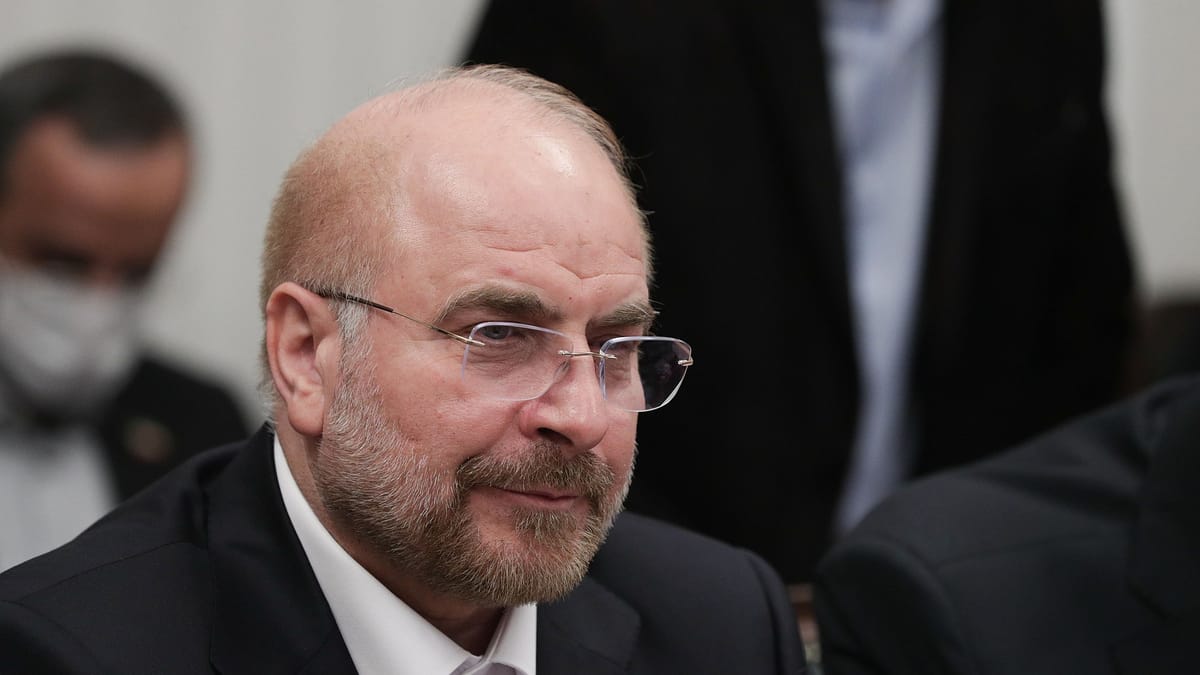
At the time, Trump declined to name the leader in question, but he has since been identified as Mohammed Bagheer Kalibaf, speaker of the Iranian parliament and one of the more moderate figures to have survived the war until now.
Kalibaf is a close political ally of Iran's new supreme leader, Mostaba Khamenei, and was a leading voice in demanding revenge against the United States and Israel in the first few days of the war. Now, however, he seems to at least be a figure who's willing to meet with the U.S. in dialogue and could help lead the region towards de-escalation.
Kalibaf immediately denied Trump's allegations on social media and claimed that Trump was working to manipulate global energy markets by claiming that negotiations had taken place. Iran's Revolutionary Guard Corps, widely understood to be collectively wielding substantial power inside Iran, rejected Trump's claims as well.
However, Steve Whitcoff is known to have participated in back-channel conversations with other Iranian officials over the weekend, including Foreign Minister Abbas Arashi. Kalibaf is not known to have traveled with Arashi at that time, nor to have been part of that negotiating team.
Pakistan has proposed that it would host mediation efforts in Islamabad, although, according to Pakistani authorities, who spoke anonymously with Turkish media, Iran is still hesitant to come to the table.
As of now, it's not clear that Kalibaf is acting with the support of the Revolutionary Guard if he intends to join negotiations at all, but he'll need to secure their support somehow if these negotiations are going to carry any real weight.
As Washington pushes for further talks this week, flight tracking data suggests that the U.S. is also preparing a set of alternatives in the event that diplomacy falls short.
Across the last several days, strategic airlifters have conducted reduced the directives within the event when Mir is going to own AK coming by the No fewer than 35 flights from the United States to the Middle East, mostly originating from bases that support rapid deployment units.
Those include multiple airborne assault or paratrooper units, as well as U.S. Army Rangers and close air support aviators. According to anonymous sources speaking to the Jerusalem Post, the U.S. is targeting the deployment of 3,000 paratroopers, alongside the 2,500 marines and approximately 2,000 sailors already inbound in an amphibious assault unit.
These forces may be intended to carry out a seizure of Iran's Karg Island and its critical oil refinery, or of islands closer to the Strait of Hormuz. Elsewhere across the Middle East, Israel expanded its ground invasion of Lebanon, working their way north through border villages, while Israeli air power destroyed bridges and key infrastructure.
Israel's finance minister, the far-right party leader Bezalel Smotrich, argued publicly that Israel should work to extend its border into Lebanon, up to the natural boundary formed by the Latani River. That is an area covering approximately 850 square kilometers, smaller than the Golan Heights or the West Bank, but more than double the size of Gaza.
Also in Lebanon, Israel continued strikes against the capital city of Beirut in the early hours of Tuesday morning. Over 1,000 people have already been killed in Lebanon since fighting reignited in early March, including 118 children. Over 1 million are already displaced.
Monday saw US forces in Syria sustain their first direct attack since the start of the conflict, when at least seven rockets were launched towards an American base in the northeast from across the Iraqi border.
Hours later, airstrikes targeted two Iraqi military bases that are used by the pro-Iran Popular Mobilization Forces, a loose collection of predominantly Shia militias.
In the United Nations, the Gulf state of Bahrain introduced a draft resolution that would authorize the use of force by any world nation to protect commercial shipping in and around the Strait of Hormuz.
The draft is unlikely to be approved by the Security Council's five veto-holding members, but it underscores growing frustrations among the nations of the Persian Gulf.
Ukrainian President Volodymyr Zelenskyy made a separate set of accusations against Russia, another Security Council member, claiming that Ukraine is in possession of, quote, irrefutable evidence that Russia is providing signals and electronic intelligence to Iran.
China, meanwhile, issued a warning on Monday towards all parties in the conflict, urging the warring nations and especially the United States and Israel to end the war before it spirals further out of control. The Iran Daily Dispatch is presented and produced by Tessa Danvers and written by Evan Maloney. Simon Whistler is our executive producer.
The Iran Daily Dispatch is a free-to-access audio news brief available exclusively on Fronts.co. The Iran Daily Dispatch and the rest of our Fronts.co podcasts, articles, and video episodes are made possible by our generous premium subscribers. Thank you, as always, for your support.
Free newsletter
WarFronts Weekly
A free briefing on conflict, defense, and security. Delivered Tuesdays, with the Blitz on Fridays.
Membership
Fronts Insider
Enjoy benefits with your membership including:
- Premium reporting & briefings
- Insider videos & visual analysis
- Key Insights summaries