
middle-east
Iran Daily Dispatch — Wednesday, March 25, 2026
No-fluff daily news and developments on the Iran War, every weekday. Want to be notified when the Daily Dispatch comes out? Sign up for the Iran Daily Dispatch newsletter.
March 25, 2026 · 9m
Transcript
Note: this transcript was generated by AI and may contain errors or inconsistencies.
This is the Iran Daily Dispatch, Episode 7. Wednesday, the 25th of March, 2026. I'm Tessa Danvers for Fronts.co. On Tuesday, U.S. President Donald Trump claimed that peace talks between Iran and the United States were ongoing as international mediators confirmed that the warring countries have engaged in indirect talks.
Right now, the substance and seriousness of those talks is a matter of much debate internationally, but Israeli media claimed on Tuesday that the U.S. has offered Iran a 15-point plan.
Essentially, the plan would lift all sanctions against Iran and assist Iran in building a civil nuclear program, in exchange for the end of Iran's nuclear weapons program, the reopening of the Strait of Hormuz, and the end of Iranian funding for its proxy allies across the Middle East.
A one-month preliminary ceasefire would pause the fighting in the meantime. Pakistan has continued to make a case for itself as a venue for any talks, leaning on both an American administration and an Iranian administration that consider Pakistan to be a strategic partner. Pakistan was the nation to deliver the United States proposal.
According to Iranian sources, the nation's foreign minister, Abbas Arashi, and its parliament speaker and de facto leader, Mohammed Bager Kalibaf, would be a part of any negotiating team traveling from Iran.
After speaking to Arashi on Tuesday, Chinese foreign minister Wang Yi claimed that Iran is committed to, quote, a comprehensive ceasefire, not just a temporary one, while also amplifying Iran's claims that the Strait of Hormuz is open for ship traffic from nations that are not party to the ongoing conflict.
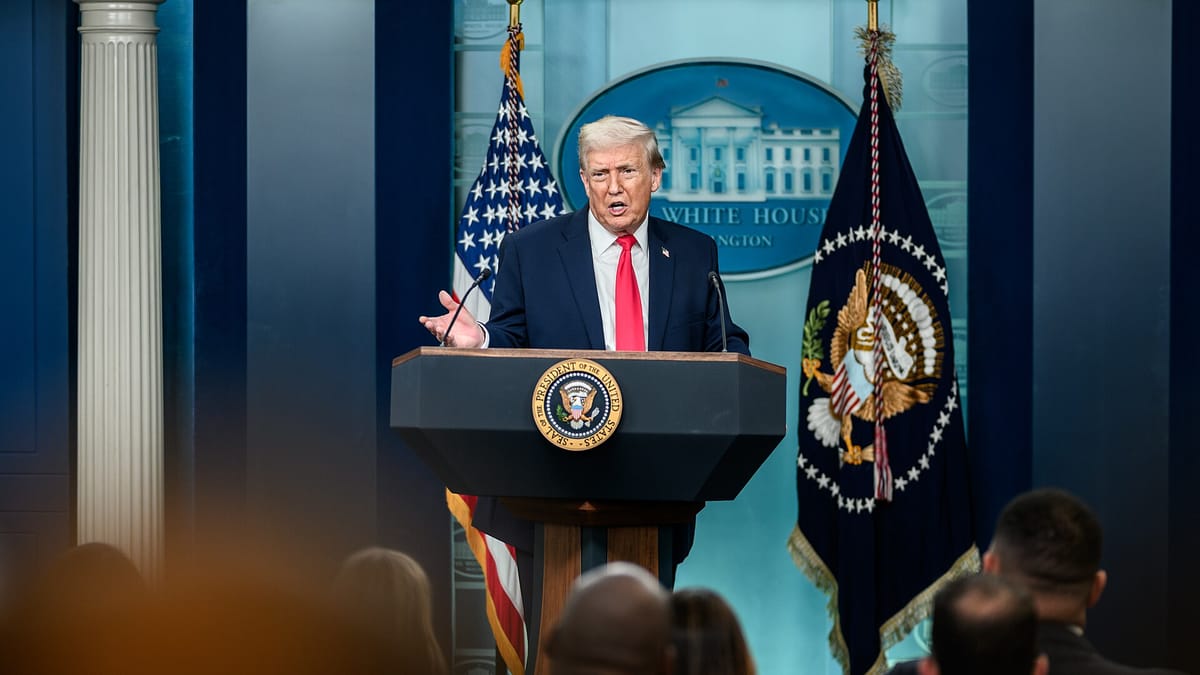
On the U.S. side, Trump stated that Vice President J.D. Vance, Secretary of State Marco Rubio, and Special Envoy Steve Witkoff are all engaged in the diplomatic process.
According to CNN, Iran has informed the United States that it does not wish to negotiate with either Witkoff or Trump's son-in-law, Jared Kushner, and would instead prefer to do business with J.D. Vance, a longtime opponent of U.S. interventions in the Middle East.
As Iran began to engage more openly with the idea of negotiations, insider reports quickly confirmed the suspicions of global experts who have observed the growing political power of the Revolutionary Guard.
Although elements of Iran's geopolitical position are weaker today than at the start of the conflict, the nation's negotiating posture is more hardline than ever.
Speaking to Reuters, several highly-placed sources in Tehran confirmed that Iran will demand serious concessions from the U.S. in any future talks, including war reparations, guarantees against future U.S. military action, and formalized control of the Strait of Hormuz.
Those positions conflicted sharply with statements from Trump this Tuesday, who alleged in remarks to the U.S. press that Iran had offered the U.S. a, quote, very significant prize related to oil and gas in or near the Strait of Hormuz. Trump declined to provide any further details.
The demands reported by Reuters sources are ones that Washington are ones that Washington is extremely unlikely to accommodate, and Tehran almost certainly knows it. So, for Iran's leadership to even consider negotiating with those core demands sends a message all on its own.
In these talks, Iran would not intend to pursue a de-escalation of the conflict in any substantive way, but would instead use the opportunity to meet with a U.S. delegation to accomplish one of two objectives. Iran could simply issue a face-to-face rebuke of Washington entirely and make clear that it intends to continue the war.
Or, it can attempt to engage the U.S. in a long but ultimately fruitless negotiating process, as Russia has managed to do in its conversations with Trump envoys.
Similarly, it's worth noting that the U.S. alleged proposal includes items that Iran is unlikely to accept, raising the possibility that both sides are more interested in the appearance of peace than anything else.
Just as important, Tuesday's events led Israeli leadership to emphasize that any U.S.-Iran negotiations will not necessarily constrain Israel's own military action.
Israeli Prime Minister Benjamin Netanyahu confirmed his nation's objectives on Tuesday, emphasizing that Israel will protect its, quote, vital interests with continued military action against both Iran and Lebanon. Just minutes after Netanyahu's statement, the Israel Defense Forces confirmed another round of airstrikes against the Iranian regime.
According to Iranian officials, a projectile struck near the nation's Boucher nuclear power plant, where reliable fallout mapping suggests that a direct hit on the plant could send a wave of irradiated debris floating across coastal Iran and the eastern Arabian Peninsula.
Iran launched several waves of missiles against Israel, primarily targeting the city of Tel Aviv, where strikes damaged buildings but did not kill any civilians. As for Lebanon, Israeli Defense Minister Israel Katz confirmed Jerusalem's plan to seize and occupy the southern portion of the country up to the territorial boundary of the Latani River.
In response, Hezbollah leaders reiterated their pledge to prevent Israeli occupation and promised a continued armed resistance for as long as Israeli troops are present in Lebanese territory. The Lebanese government, meanwhile, expelled its Iranian ambassador after an Iranian missile killed three people in Beirut overnight, including a child.
A second missile was intercepted by a foreign vessel off the Lebanese coast. As the U.S. continues to explore the prospect of a negotiated settlement with Iran, the nation is also hard at work preparing a military alternative.
Confirming reports we shared in yesterday's installment of the Daily Dispatch, the U.S. Pentagon is now preparing to deploy roughly 3,000 U.S. troops from the Army's 82nd Airborne Division. The New York Times disputed that claim later in the day, suggesting that the number of new troops deployed will be closer to 2,000.
Low defense officials speaking to Politico emphasized that Washington has not yet decided to place troops on Iranian soil. The 82nd Airborne is a quick reaction force on constant standby. And, according to Axios correspondent Barak Ravid, they will deploy alongside multiple infantry brigades from other Army units.
Land-based Marine Corps F-35 aircraft have also begun a series of transatlantic crossings, with at least 10 F-35s known to have reached Europe by Tuesday evening.
Other recent flights from the United States suggest potential deployments of U.S. Army Rangers and Special Forces, highly specialized helicopter pilots, and quite possibly the U.S. Delta Force, an elite special operations unit whose missions typically involve counterterrorism, reconnaissance, and various forms of direct action.
Tuesday's events included several other key developments, both in Iran and elsewhere. Internally, the Iranian regime promoted a former Revolutionary Guard commander and known political hardliner, Mohamed Baquer Zulkadzir, as the head of the Supreme National Security Council.
That was the position formerly held by Ali Larajani, the man who was recognized as Iran's de facto leader until his death in the coalition airstrikes last week.
Zulkadzir is a close ally of Mosheba Khamenei, Iran's new supreme leader, suggesting either the active influence of a man whose status has been highly uncertain, or otherwise an effort by the Revolutionary Guard to act in accordance with his wishes. Across the Persian Gulf, Arab nations took varying steps to adjust to new developments in the conflict.
CNN reported on Tuesday that Saudi leader Mohammed bin Salman urged the United States to continue the war with Iran until its missile and drone capabilities are as thoroughly degraded as possible.
In contact with the White House, bin Salman reportedly framed the war as a, quote, historic opportunity for the U.S. and its partners to establish a new order in the Middle East. Qatar, as anticipated, declared force majeure on long-term liquefied natural gas contracts, with customers based in China, South Korea, Italy, and Belgium.
In Bahrain, Amazon Web Services reported disruptions after drones appeared to target its main facility in the country, although direct damage to the facility has not yet been reported.
In Kuwait, drones struck a fuel tank at the international airport, and in Europe, British officials made global headlines with an announcement that the British Navy will take the lead in a multinational naval coalition to reopen the Strait of Hormuz.
According to London, the UK will deploy mine-sweeping vessels alongside France, the United States, and possibly other participating nations. Further details on the upcoming coalition operations have not yet been made public. Finally, a rare thunderstorm may change the complexion of the entire conflict in the next several days.
According to current forecasts, the Middle East is on track to be hit by a line of unusually powerful storms, gathering strength as they impact the Arabian Peninsula. Qatar, the Emirates, Saudi Arabia, Kuwait, and eventually Iran are all expected to be in the storm's path.
Dust storms, flooding, hail, and even tornadoes have been forecast, raising the prospect of sudden and citywide disruption. in places like Doha, Dubai, and Abu Dhabi. The storm is expected to strike on Thursday and will eventually exit the region by Saturday.
While any impact on the conflict will depend on the storm's path and intensity, it may prove to be a highly disruptive event, especially in areas where critical infrastructure has already been damaged. The Iran Daily Dispatch is presented and produced by Tessa Danvers and written by Evan Maloney. Simon Whistler is our executive producer.
The Iran Daily Dispatch is a free-to-access audio news brief, available exclusively on Fronts.co. The Iran Daily Dispatch and the rest of our Fronts.co podcasts, articles, and video episodes are made possible by our generous premium subscribers. Thank you, as always, for your support.
Free newsletter
WarFronts Weekly
A free briefing on conflict, defense, and security. Delivered Tuesdays, with the Blitz on Fridays.
Membership
Fronts Insider
Enjoy benefits with your membership including:
- Premium reporting & briefings
- Insider videos & visual analysis
- Key Insights summaries