
middle-east
Iran Daily Dispatch — Friday, March 20, 2026
The Iran Daily Dispatch reports on the escalating conflict between Israel and Iran, and its impact on global energy markets.
March 20, 2026 · 9m
Transcript
Note: this transcript was generated by AI and may contain errors or inconsistencies.
This is the Iran Daily Dispatch, Episode 4, Friday, the 20th of March, 2026. I'm Tessa Danvers for Fronts.co. On Thursday, global energy markets were sent reeling by the events of the prior day, when Israel and Iran had traded escalatory airstrikes against critical energy infrastructure.
For further information on those strikes at Iran's South Par's Natural Gas Deposit, Qatar's Ras Lafon Liquefied Natural Gas Refinery, and other sites, see yesterday's installment of the Iran Daily Dispatch, or the Thursday episode released on our sister channel, Warfronts, over on YouTube.
Early Thursday, Brent crude oil spiked to US$119 per barrel, while global natural gas prices jumped by roughly one quarter compared to the prior day. The value of both commodities dropped as the day went on, but not enough to return to their value prior to Wednesday's strikes.
Also on Thursday, Israel pledged to avoid any further strikes on the South Par's gas field, at the request of the United States. Qatar's state-owned LNG and oil company, Qatar Energy, announced that Iran's strike on Ras Lafon had wiped out roughly 17% of its LNG capacity, equivalent to 3.5% of the world's total LNG supply.
Qatar Energy executives estimated that the damage from the strike will take three to five years to fix, and indicated that the company may be compelled to declare force majeure on several long-term contracts, serving China, South Korea, Italy, and Belgium.
Global demand for LNG exceeded supply even prior to the start of the current Middle East conflict, and those nations will be forced to either replace the shortfall through other energy sources, or outbid other LNG customers that have already reached provisional agreements to secure their own supply.
Also in Qatar, the Shell Energy Corporation announced that it will stop production at a key gas-to-liquids facility at Ras Lafon, where, in ordinary times, Shell converts natural gas into liquid form at a rate of 140,000 barrels per day.
Saudi Aramco confirmed that Iran struck an oil refinery at the Red Sea port of Yanbu, as claimed by Iranian state media on the prior evening. While Iran's drone strike only caused limited damage, it was notable for two other reasons.
First, Yanbu and other Red Sea energy infrastructure had previously appeared to be outside the confines of the Middle East conflict. Second, the Yanbu refinery is located 1,500 kilometers from Iranian soil at its nearest point, indicating that at least one Iranian drone managed to fly across Saudi Arabia without interception.
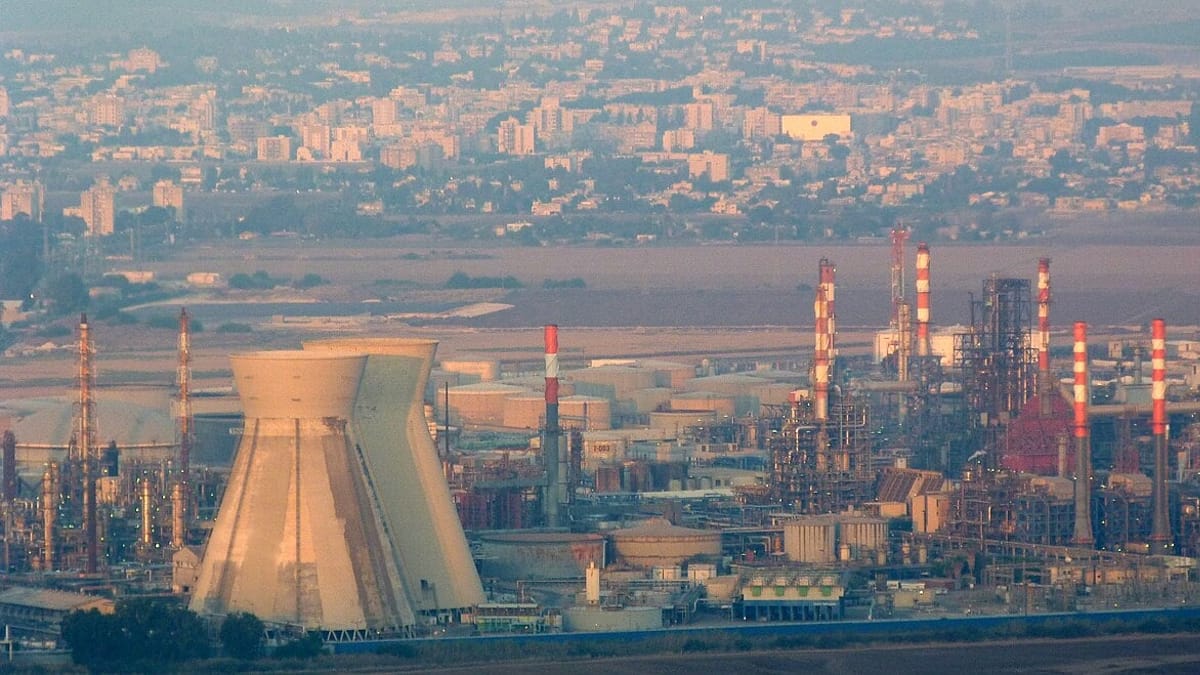
Second, the Yanbu refinery is located 1,500 kilometers from Iranian soil at its nearest point, indicating that at least one Iranian drone managed to fly across Saudi Arabia without interception. On Thursday, Iran continued to expand the scope of its retaliatory strikes, hitting an Israeli oil refinery in the city of Haifa.
That facility is one of just two major refineries in Israel, and it produces a majority of the refined oil that Israel needs for its domestic consumption. The Iranian Revolutionary Guard Corps confirmed that the Haifa strike was a direct act of retaliation for Israel's attack on the South.
Southpaw's natural gas deposit, which is responsible for roughly 80% of Iran's domestic natural gas consumption.
Similar to Iran's strike in Saudi Arabia, the missile strike at Haifa suggests that Israeli air defenses either were not up to the task of interception for one of Israel's most important economic installations, or were depleted of interceptors at the time of the Iranian strike.
Global analysts and anonymous government insiders have been raising alarms on a growing missile interceptor shortage for weeks, underscored on Thursday by statements from the CEO of the German arms manufacturer, Rein Mittal.
From his description, missile interceptor stockpiles in Europe, the United States, and the Middle East are at risk of running empty, and new interceptor deliveries will now come from the U.S. Indo-Pacific Strategic Command. If the conflict were to end tomorrow, those interceptor shortages would already take multiple years to address fully.
According to Times of Israel reporter Manny Fabian, Israel has adjusted its own approach to missile interception in the last several days, and now will not attempt to intercept Iranian cluster bomblets.
Iran has used cluster munitions to get around Israeli air defenses in this and other recent conflicts, with those munitions dispensing several dozen small bomblets when the main missile carrying their warhead is successfully intercepted.
Cluster bomblets are small explosives, but have caused nine deaths across Israel in this conflict already as of the time of writing. Also in discouraging news for the U.S. and Israeli offensive, U.S. CENTCOM acknowledged reports on Thursday that an American F-35 stealth aircraft was forced to conduct an emergency landing at a Middle Eastern airbase.
According to a report by CNN, that F-35 had been struck and seriously damaged by Iranian fire, in what would be the first known instance of an Iranian air defense hit on a coalition combat aircraft. CENTCOM officials refused to confirm or deny the report, but indicated that the pilot landed the aircraft safely.
In further news from the United States, Reuters reports that Washington is now considering the deployment of thousands of additional U.S. troops to the Middle East to lay the foundation for a potential ground invasion of the Iranian mainland.
Later in the day, Newsmax reported that the U.S. intends to deploy a second marine expeditionary unit to the Middle East from the U.S. west coast, bringing the total number of marines deploying to the region to 5,000.
Reuters cited a U.S. official and other insiders who indicated that the deployments are intended to provide new options to the U.S. leadership. At present, those sources indicate the U.S. is considering an expanded mission to secure the Strait of Hormuz, possibly including troop deployments on the Iranian coast.
The White House is also weighing an attack at Karg Island, confirming expert analysis across the last several weeks, and may consider limited deployment of forces to secure Iranian stocks of highly enriched uranium.
Relating to the prospect of U.S.-friendly ground troops in Iran, international conflict journalist Loveday Morris also released a report on Thursday, providing clarity on previous U.S. efforts to support an Iranian Kurdish infiltration on Iranian soil. According to Morris, small Iranian...
British units did deploy into the nation from Iraq in early scouting missions during the war's first few days, but were forced to withdraw due to the risk of friendly fire from U.S. and Israeli airstrikes.
In Washington, the Pentagon submitted a request to the U.S. Congress to provide $200 billion in supplemental defense funding to finance the ongoing conflict. The request may create friction between the White House and American lawmakers who have not formally authorized U.S. operations in Iran.
Despite its control of both houses of the U.S. legislature, the Trump administration relies on thin voting majorities at a time when Republican lawmakers are seeking re-election.
Also on Thursday, a Reuters-Ipsos poll found that a mere 7% of American respondents would support a U.S. ground invasion, implying substantial political costs for Republicans who are perceived to be supporting an expansion of the conflict.
Iran has undergone a very different sort of political turmoil after several rounds of decapitation strikes against Iran's political and military leadership. Over the last several days, attention has shifted towards two figures whose stock seems to be rising in Tehran, Parliament Speaker Mohamed Kalibaf and former nuclear negotiator Saeed Jalili.
Kalibaf is a highly experienced leader with credentials at the commander level in the Revolutionary Guard Corps, and in civilian positions as the chief of the Iranian National Police and the mayor of Tehran. Jalili, by contrast, is among the most hardline members of Iranian leadership.
And while he was a close ally to now-deceased de facto leader Ali Larijani, he is expected to advocate positions even more extreme than Larijani and other high-level hardliners. Finally, Thursday saw evolving debates across both Europe and the Middle East on each region's respective approach to the conflict.
In Europe, the leaders of the UK, France, Germany, Italy, and the Netherlands issued a joint statement, joined by Japan, expressing, quote, readiness to contribute to appropriate efforts to ensure safe passage through the strait.
On paper, the statement reflects a reversal in their prior positions, after those same nations had resisted Washington's demands to step up their involvement.
A combination of Iran and Israel's escalatory strikes against enemy targets and pressure placed on Japanese leaders during a visit to the White House may help explain the shift, although the statement did include language to hedge the commitments of its signatories.
In the Middle East, Saudi Arabia set plans for a summit of Middle Eastern foreign ministers, scheduled for next Wednesday and slated to include Turkey, Qatar, the Emirates, Pakistan, Egypt, Azerbaijan, and several other nations.
A parallel effort by Iran calling for regional coordination alongside Turkey, Pakistan, and Egypt appears to have drawn a more muted response. The Iran Daily Dispatch is a free-to-access audio news brief, available exclusively on Fronts.co.
The Iran Daily Dispatch and the rest of our Fronts.co podcasts, articles, and video episodes are made possible by our generous premium subscribers. Thank you, as always, for your support. support.
Free newsletter
WarFronts Weekly
A free briefing on conflict, defense, and security. Delivered Tuesdays, with the Blitz on Fridays.
Membership
Fronts Insider
Enjoy benefits with your membership including:
- Premium reporting & briefings
- Insider videos & visual analysis
- Key Insights summaries